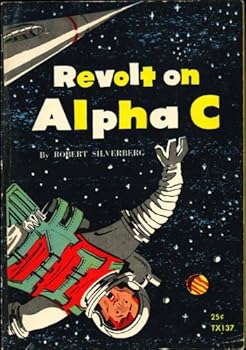

More speculative fiction by Robert Silverberg

Beyond Armageddon — (1988-1989) Publisher: Millions of years in the future, a small tribe of humans emerge from an underground cocoon to reclaim the planet for themselves.


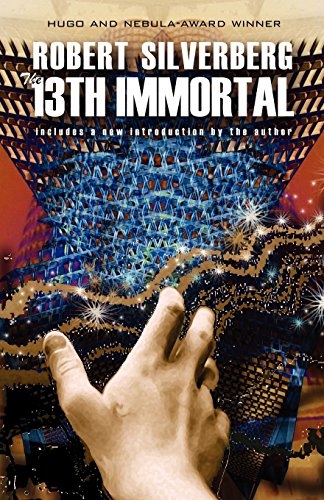
The 13th Immortal — (1956) Publisher: THE SECRET OF THE FORBIDDEN CONTINENT. What happens when men become immortal? Can living forever become boring? What happens to you when you see your lovers, wives and even children grow old and die and you continue in a status that defies aging? Life upon a planet divided into twelve grids wherein each section has its Immortal or Duke and seems to be tranquil and well-organized. How is it that a 13th immortal becomes known and challenges the stability and ways of the other twelve rulers?”Who was your father?” the mutant asked Dale Kesley. And try as he might, Kesley could not remember: his past was an utter blank. But he knew one thing — the answer to his life’s riddle lay in Antarctica, the once frozen continent, now an earthly paradise surrounded by an impenetrable barrier. But how to get there? The only means of transportation were the spindly six-legged mutant horses. And it was suicide for Kesley to travel on the American continents. Two immortal dictators had set king-size rewards for his capture — dead or alive. But somewhere in the two continents there was someone who would help him, someone he had to find. The future of the world depended on his success. A fascinating, well-written novel of life upon an earth of the future.
Master of Life and Death — (1957) Publisher: Global overcrowding, a new immortality serum and an unfriendly alien ambassador are only a few of the problems confronting Roy Walton, government’s new Master of Life and Death in Robert Silverberg’s early and accomplished novel. Praised by a distinguished critic, Anthony Boucher, for “its complete clarity and narrative drive” the novel retains its power today.
Collision Course — (1958) Publisher: The crew of the XV-ftl was looking forward to shore leave, vacation, and a chance to see their families after a month in space. But once they brought back the news that they had discovered aliens, they were doomed to another, and longer, journey. Accompanying them on the return were several technical experts, who seemed to be more interested in squabbling with each other than meeting the first alien race in the history of humankind. But face to face with the blue humanoid Norglans, everyone began to realise just how important these first meetings could be — for they could make the difference between peaceful coexistence in space and interstellar war! 
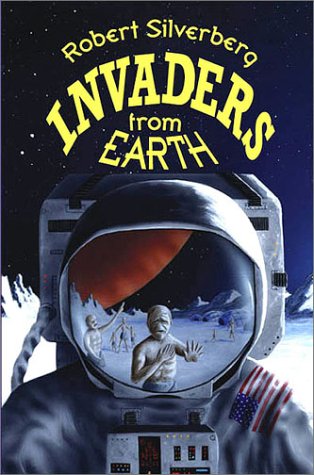
Invaders from Earth — (1958) Publisher: Like Pohl and Kornbluth’s SPACE MERCHANTS this is a novel of sophisticated government deception in the near future, an exploration of political corruption. Written in 1957 when Silverberg was 22, the novel is cynical and highly suspenseful. Silverberg, long recognized as a great science fiction writer, is a multiple award winner.
The Silent Invaders — (1958) Publisher: The story involves an alien race who have surgically altered themselves in such a way as to pass for human. They are infiltrating Earth with plans to take it over. But gradually the hero, one of the alien spies, finds that he is becoming more and more human. Eventually he goes native, and the invasion fizzles out. Silverberg is a good enough writer to almost convince you that an alien can become a human when he looks and acts like a human. But he does not completely persuade.
Stepsons of Terra — (1958) Publisher: What do you do when your planet is under threat from aliens, you have travelled light years to make contact with Earth (after 500 years of silence) and you then find no-one cares? A classic novel by the Hugo and Nebula award winner.
Aliens From Space — (1958) Publisher: It started off like an ordinary day for Dr. Jeffrey Brewster, assistant professor of psycho-sociology at Columbia University. He’d been six weeks old when the first crude satellites were flung into space back in 1957. During his childhood there had been Moon rockets and the space stations — then the joint American-Russian-manned expedition to the Moon in 1965, right after the collapse of the Soviet dictatorship. Mars and Venus had been reached as he grew up and a permanent base was established on the Moon in 1973. Now the day’s papers reported that an expedition was ready to leave for Callisto, moon of Jupiter. But Dr. Brewster had a class to make and he was late. That was when the telephone rang and Mari, his wife, said, “Long distance from Washington.” The caller was Colonel Chasin of Unsecfor — United Nations Security Force, the global and international army that policed the world in these days of relative peace and harmony. Chasin explained that a serious matter had come up, something …
The Planet Killers — (1959) Publisher: In The Planet Killers, the Security Computers of Earth Central determine that the frontier world of Lurion will launch an all-out attack on Earth in 67 years, sending Agent Roy Gardner to the rough-and-tumble planet to ensure that doesn’t happen — even if it means blowing Lurion to interstellar dust! In The Plot Against Earth, agent Lloyd Catton must work with skeptical, suspicious alien agents to bust a hypnojewel racket, unveiling a multi-planet conspiracy threatening the Earth itself! In One of Our Asteroids is Missing, independent miner John Storm discovers an impossible asteroid rich with fabulously valuable metals and minerals, only to find his claim stolen, along with all computer records indicating that he had ever existed! Never before reprinted since their original appearances and with a new introduction by the author, these three novels of science fiction adventure blaze back onto the scene, revealing early masterworks of one of the genre’s most gifted and celebrated storytellers!
Starman’s Quest — (1959) Publisher: The complicated problem of time lags and speedups in space travel brings about a conflict between twin brothers. The Lexman Spacedrive gave man the stars — but at a fantastic price. Interstellar exploration, colonization, and trade became things of reality. The benefits to Earth were enormous. But because of the Fitzgerald Contraction, a man who shipped out to space could never live a normal life on Earth again. Travelling at speeds close to that of light, spacemen lived at an accelerated pace. A nine-year trip to Alpha Centauri and back seemed to take only six weeks to men on a spaceship. When they returned, their friends and relatives had aged enormously in comparison, old customs had changed, even the language was different. Alan was a spacer, just like his whole family — until, suddenly and without intending to, he in turn jumped ship and remained on Earth! There were times he regretted that. Earth was a bewildering and utterly hostile place. To stay alive, he had to play a ruthless game — and he couldn’t even find anyone to tell him the rules… 
Lost Race of Mars — (1960) Ages 9-12. Publisher: Are the Old Martians really a lost race — just withered mummies lying in dark caves? Or are they still alive — somewhere on the red planet? Sally and Jim must find out. They must help their father discover if the Old Martians still exist. His life work as a scientist is at stake! But it’s not easy. They are only visitors to the Mars colony in this year 2017. And no one really wants them there.
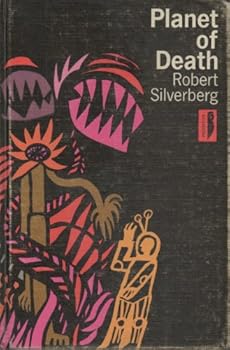
Planet of Death — (1960) Publisher: Earthman Roy Crawford is framed for murder on the planet Velliran. He has two choices. He must escape from the planet within three days or go to prison for life. But the only spaceship leaving the planet within three days belongs to the Exploration Corps. This is a group of scientists which investigates new planets. They are about to leave for World Seven on the Star System Z-16. With help from his friends, the dazed Crawford finds himself in the ship. The scientists, of course, think he is one of them. But World Seven is no escape for Roy. It is a planet of death. The team of scientists find themselves in a world where even the trees are killers. And one more killer is on the spaceship — the real murderer who framed Crawford!
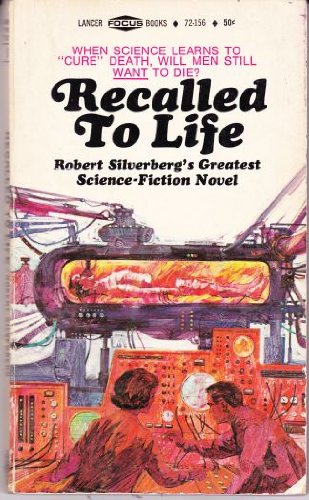
Recalled to Life — (1962) Publisher: When a nervous scientist from Beller Laboratories approached James Harker, asking him to introduce a new scientific discovery to the world, Harker had his own reasons for agreeing. The discovery was a reanimation process — bringing the recently dead back to life. But Harker hadn’t anticipated treachery within the ranks of the scientists working on the process, nor on the consternation and mounting hysteria when the news broke. James Harker faced the most demanding task of his life — and he didn’t know if he would live to see the results.
The Seed of Earth — (1962) Publisher: The computer had chosen them — a small cross-section of humanity to serve Mankind’s Destiny. Out of seven billion people on Earth mechanical chance had selected them as involuntary colonists on an unknown planet. In seven days they would be on their way, on a sink-or-swim mission to a lonely world beyond the limits of the Solar System. It was a summons each had privately dreaded, yet always been prepared for. But no one had prepared them for the vicious attacks of sinister aliens…
Regan’s Planet — (1964) Publisher: In 1492, Colombus discovered America. In 1992 Claude Regan had to make it happen again! The US needed a shot in the arm as the twentieth century entered the last decade. And a World’s fair celebrating five hundred years of American civilisation might just do the trick. Regan was the trickiest, most ruthless promoter in the country. And the first thing he realised was that Earth wasn’t big enough to hold the kind of fair he wanted So he built a new world!
Time of the Great Freeze — (1964) Publisher: Miles beneath the layer of ice that covered Earth in the New Ice Age of 2300 A.D., men survive in the subterranean cities they built to save themselves as the ice crept with killing cold over all living things. For three hundred years no one has seen the surface or communicated with any other city. Until now. Now the few scientific instruments that remain seem to indicate that the Ice Age may be ending; outside temperatures are reaching a level that may make life possible — though not easy — on the outside. But life in the undergournd cities is comfortable, and those few who are brave enough to be curious about the unknown frozen world above are suspect; troublemakers. A small party of these “troublemakers,” led by Dr. Raymond Barnes, with a few scientists and others who think they might prefer freedom to safety, has been allowed to take the long-unused elevator up through the ice to the outside. But they go more as exiles than as a scientic expedition; they are not expected — and may not be allowed — to return.
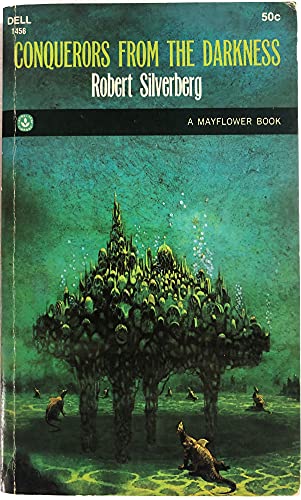
Conquerors from the Darkness — (1965) Publisher: A thousand years in the future, the earth has been conquered by an alien race and covered by a single sea. Dovirr Stargan, who is disgusted with the servility of his life on the floating city of Vythain, longs to become one of the Sea-Lords, who roam the sea as powerful protectors of the cities. Dovirr gets his wish, but the return of the alien race brings unexpected and critically dangerous crises to his new life as he learns the real, sometimes terrible, significance of power.
To Open the Sky — (1967) Publisher: Eternal life. Isn’t that what every religion offers in some way? Existence beyond just this? For Noel Vorst, the quest for eternal life is something much more tangible, driven through science, reaching out to the physical stars in place of a metaphorical Heaven. For his followers, the Vorsters, that quest becomes a religion, technology their god. Others hold on to the belief that it is these bodies, these genes that make us one with the universe. This renegade sect, the Harmonists led by David Lazarus, find a home on Venus, their own agendas in stark conflict with the Vorsters. In the search for life everlasting, it seems that the only thing eternal is human ambition. Religion is, after all, first and foremost a political business. This sprawling, episodic novel by master of thoughtful science fiction Robert Silverberg weaves multiple lives together across the solar system and over nearly a century. Blind faith, practicality, conflict, deception — the more mankind changes, the more it unfortunately stays the same.
The Gate of Worlds — (1967) Publisher: In this alternate history novel, the Bubonic Plague sets the stage for a world where the West is powerless. After the Black Death has wiped out most of the European population, there is little defense against Turkish invasion and expansion, and by the 1980s, the major world powers are the Russians, the Turks, the Aztecs, the Incas, and the Japanese. Dan Beauchamp, a young Englishman whose heart longs for fortune and adventure, travels to industrial Mexico and discovers that he has a lot to learn.
Those Who Watch — (1967) Publisher: THOSE WHO WATCH is the strange, seductive novel of three inadvertent colonists from outer space whose accidental encounter with Earth triggers interplanetary conflict. It also the most unusual love story ever written. VORNEEN — the seducer, in the shell of an Apollo who came out of nowhere into the life of Kathryn Mason GLAIR — the perfect woman, an empty form who filled the hours of Tom Faulkner MIRTIN — otherworldly friend and mentor to an 11-year-old Indian boy who accepted the extraordinary on faith ONLY THREE HUMANS WOULD EVER KNOW that the blinding flash in the sky on that night in 1982 was an exploding flying saucer. Only they would learn the truth about THOSE WHO WATCH — about the alien beings who came to this world in a crash landing from the stars.
The Time Hoppers — (1967) Publisher: They’d been turning up in other centuries for a long time now. Men from the 25th century whose only escape from the pressures of a totally controlled environment was to travel backwards in time to another era. They’d raised children, performed great deeds. In short, they’d become a part of history. But now it was 2490 And the date they’d time hopped from was fast approaching. Was their disappearance back in time inevitable? What if they were prevented from vanishing when the time came? Would history simply collapse? Would centuries of human acheivement simply be wiped off the record?
Thorns — (1967) Publisher: In a world where humanity has colonized the solar system and begun to explore more of the local galaxy, a vast audience follows real-life stories presented by wealthy media mogul, Duncan Chalk. Chalk feeds on the pained emotions of others. He plays cruelly with his staff, but gorges on the mass emotions generated from the dramas he orchestrates. Chalk pairs Minner Burris, an emotionally-withdrawn space explorer who was captured and freakishly surgically altered by aliens and Lona Kelvin, a suicidal 17-year-old girl who donated eggs for a fertility experiment that produced a hundred babies none of whom she has been allowed to adopt or even see. Chalk promises to solve their personal problems in return for a joint performance tour. As Burris and Kelvin grow close, they find that their mutual weaknesses somehow strengthen them. But, will that connection be enough to overcome the tricky machinations of Duncan Chalk? And will the mystery behind Minner’s transformation take them beyond their weakened humanity? An early exploration of media exploitation and a deep look at freakshow entertainment on a mass cale, THORNS shines as one of the earliest of Silverberg’s mature masterworks.
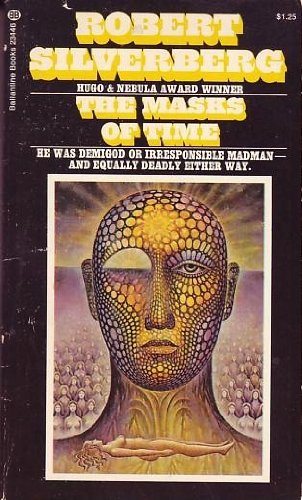
The Masks of Time — (1968) aka Vornan-19 Publisher: Vornan-19 fell from the sky, naked, and landed on the Spanish steps in Rome on Christmas afternoon toward the end of the Millennium. And for Leo Garfield things would never be the same. For he is an acknowledged expert in the time reversal properties of sub-atomic particles… and Vornan-19 claims to come from far in the future. Whether or not he is telling the truth, a nervous and edgy world accepts the charming and magnetically charismatic Vornan as some kind of messiah. Even Garfield and his fellow scientists fall under Vornan’s spell. But, has he really traveled across time — or is he just a charlatan and a fraud? A compassionate and powerful novel worthy of comparison to Stranger in a Strange Land.
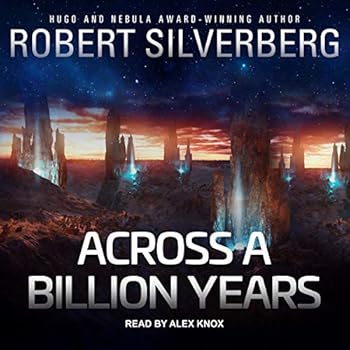
Across a Billion Years — (1969) Publisher: A brother’s “message cubes” to his twin sister relate the unusual adventures of the archaeological expedition he accompanies into space in the twenty-fourth century.
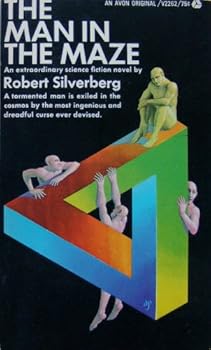
The Man in the Maze — (1969) Publisher: As the first human to interact with an intelligent alien species, Richard Muller learned almost nothing during his year-long visit to the home planet of the strange, silent Hydrans. At the end of his mission, Muller discovers that the Hydrans secretly altered his mind to radiate his emotions to any human who comes near. He quickly learns from his friends and companions that experiencing the horrifying reality of a human soul invariably induces revulsion and despair. Rejected from society, Muller renounces his allegiance to the human race and isolates himself as the only being … human or alien … to successfully navigate the hidden death-traps into the center of the abandoned city of Lemnos. After nine years of contented solitude, a bitter and cynical Muller watches as a human crew arrives at the gate of the city and attempts to penetrate the maze. He is not aware that their mission to end his self-imposed isolation is more than the rescue of one man, it is a desperate attempt to rescue the fate of mankind.
Three Survived — (1969) Publisher: Tom Rand, a practical engineer, and two other men are the only survivors of a spaceship explosion. Marooned on a hostile planet, they are being held captive by a group of “aliens.” Their one slim chance of survival is to reach a rescue beacon placed on the planet years before by men from Earth. Can the three survivors escape what seems like certain, immediate death? And if they do, can they make their way through a jungle filled with untold dangers and reach the beacon in time?
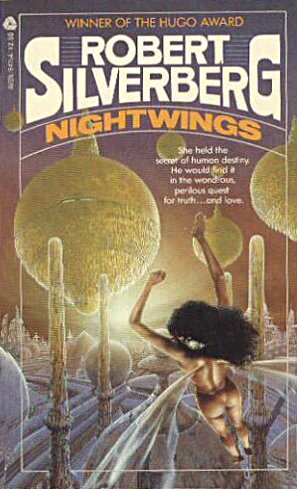
Nightwings — (1969) Publisher: A fabulous tale of pilgrimage and hope, betrayal and transformation by one of science fiction’s greatest writers. Only at night on the winds of darkness can she soar. And it was Avluela the Flier’s ebony and scarlet wings that lead the Watcher to the seven hills of the ancient city from which, in a moment of weakness, the Watcher failed his vigil, leaving the skies and deep space unguarded. The invaders came and conquered. With Avluela lost in the turmoil of conquest, the Watcher set out alone for the Holy City home of the Rememberers, keepers of the past. This is where the secret of Earth’s salvation lay hidden in antiquity. On his journey the Watcher hoped to recapture his youth and find the soaring, beautiful woman he loved. But Avluela held more for the Watcher — and Earth — than love. Her wonder stretched beyond flight, for she knew the riddle that would free all men…
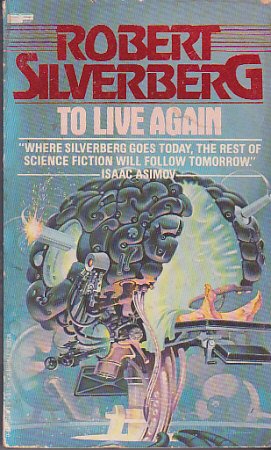
To Live Again — (1969) Publisher: First published in 1969, this novel by one of the most prolific authors in the history of science fiction explores an idea that is truly “far out.” Imagine a future world where death is not exactly the end. You can record everything about you that ever made you a distinct human being and then be implanted in the mind of someone living. Paul Kaufmann had been the richest and most powerful man on Earth. Imagine having his knowledge and insights integrated with your own persona. The tycoon’s mind becomes the prize in a deadly game for those still living who want more out of life than they could ever achieve on their own. The great man’s “soul” is stored in the Scheffing Institute, waiting for the time when someone hungry enough gives him back his appetite. Silverberg extrapolates as only he can from this intriguing premise. “To Live Again” is about a future where the dead are slaves to the living — until at last someone leads a rebellion.
World’s Fair 1992 — (1970) Publisher: Bill Hastings was one in a million. He was the winner of a planet-wide contest, and the prize was a chance to spend a year working at the 1992 World’s Fair. For the young xenobiology student, it was the opportunity of a lifetime. Fifty thousand miles above the Earth, a gigantic satellite moved in its elegant orbit. It would be Bill’s home for a year, and host to hundreds of thousands of visitors. The 1992 World’s Fair was to be an orbital extravaganza, and Bill Hastings thought that his dreams had come true. He had a lot to learn.
Son of Man — (1971) Publisher: In the beginning… there was no Brooklyn, no St. Louis, no Shakespeare, no moon, no hunger, no death… In the beginning… there were no real men, no real women, nothing but dispassionately passionate ambisexuals of the lowest and highest order… In the beginning… the heavens, the seas and the Earth belonged to more intelligent species than a man called Clay could ever have dreamed possible in his own time. But his own time as a man had passed, and now his time as the son of man had come! Clay is a man from the 20th Century who is somehow caught up in a time-flux and transported into a distant future. The earth and the life on it have changed beyond recognition. Even the human race has evolved into many different forms, now coexisting on the planet. The seemingly omnipotent Skimmers, the tyrannosaur-like Eaters, the sedentary Awaiters, the squid-like Breathers, the Interceders, the Destroyers — all of these are “Sons of Man”. Befriended and besexed by the Skimmers, Clay goes on a journey which takes him around the future earth and into the depths of his own soul. He is human, but what does that mean? Robert Silverberg has been writing science fiction for fifty years. Among his many books are such novels as Dying Inside, Lord Valentine’s Castle, The Book Of Skulls, and Nightwings, and he has had more than five hundred short stories published as well. He is a five-time winner of both the Nebula award and the Hugo award. In 2004 he was awarded the Grand Master Nebula of the Science Fiction Writers of America, science fiction’s highest honor.
A Time of Changes — (1971) Publisher: Set in the distant future, when human beings populate a variety of planets, A Time of Changes examines the society of Borthan. For thousands of years, Borthan has been ruled by a covenant that teaches that the individual self is to be despised. The baring of personal thoughts and feelings to another represents the most heinous crime. Kinnall Darival, an exiled prince of the country of Salla, has always outwardly observed this covenant. But inwardly, he commits a grave offense when he falls in love with his bondsister, Halum. By law, he cannot reveal his affections, nor act on them. But when an Earthman reveals to him a miraculous drug that enables two persons to completely bare their souls to each other, Kinnall begins a covert revolt.
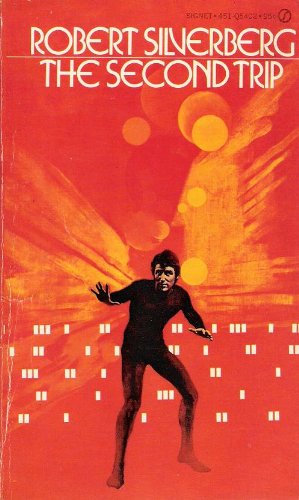
The Second Trip — (1972) Publisher: Manhattan 2012: Nat Hamlin’s brilliant career as an artist came to an end the day he went insane and embarked on a murderous rampage … his sentence: Total Personality Replacement. Lissa loved Nat for his passion, now she loves him again — but as Paul Macy — for his warmth and kindness. Now each personality wants her help in battling the other, for with her Power, the man she chooses can kill the other. Lissa is terrified. She has to send one of her loves to his destruction. If she chooses the wrong man, the horror will never end.
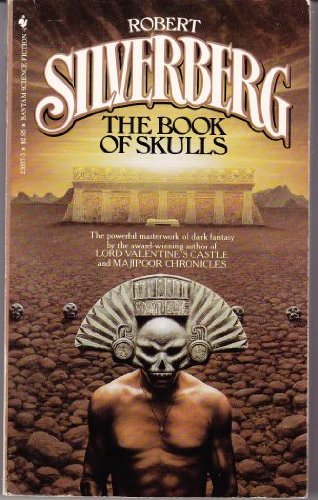
The Book of Skulls — (1972) Publisher: Seeking the immortality promised in an ancient manuscript, The Book of Skulls, four friends, college roommates, go on a spring break trip to Arizona: Eli, the scholar, who found and translated the book; Timothy, scion of an American dynasty, born and bred to lead; Ned, poet and cynic; and Oliver, the brilliant farm boy obsessed with death. Somewhere in the desert lies the House of Skulls, where a mystic brotherhood guards the secret of eternal life. There, the four aspirants will present themselves – and a horrific price will be demanded. For immortality requires sacrifice. Two victims to balance two survivors. One by suicide, one by murder. Now, beneath the gaze of grinning skulls, the terror begins…
The Stochastic Man — (1975) Publisher: In a not-too-distant future, the assassination of an all-powerful New York City Mayor has plunged the five boroughs back into a dangerous cesspool of crime, drugs, and prostitution. Professional prognosticator Lew Nichols joins the campaign team of a fast-rising politico running for the city’s top office, and is introduced to a man who privately admits to being able to view glimpses of the future. Lew becomes obsessed with capturing the man’s gift and putting it to use for his candidate, but struggles to accept the strict terms he arranges with his mentor … and the unforgiving predetermination of the future. Hugo Award Nominee, John W. Campbell Memorial Award Nominee, Nebula Award- Nominee
Lord of Darkness (1983) Publisher: Set in the 17th century and based on a true-life historical figure, this novel is a swashbuckling tale of exotic lands, romance, and hair-raising adventures. Andrew Battell is a buccaneer on a British ship when he is taken prisoner by Portuguese pirates. Injured and ailing, Andrew is brought to the west coast of Africa where his only solace is Dona Teresa, a young woman who nurses him back to health. Once his health is restored, Andrew’s only hope to return home is to first serve his Portuguese masters, but it is a hope that dwindles as he is pulled further and further into the interior of the continent, into the land of the Jaqqa — the region’s most fierce and feared cannibal tribe — overseen by the powerful Lord of Darkness. Survival means becoming one with the Jaqqa; if he can endure their gruesome rites and initiations. Originally published in 1984, this story by a master of science fiction and fantasy demonstrates the timelessness of any great adventure and will provoke thought in a new audience on the determination to persevere at any cost.
Gilgamesh the King — (1984) Publisher: We’re used to hearing about the latest tell-all memoir from one of today’s sports figures, political insiders, or celebrity wannabes. But what if we discovered that one of history’s greatest heroes had written his life story? That’s the premise behind Robert Silverberg’s amazing novel Gilgamesh the King. The journey begins when six-year-old Gilgamesh’s father dies. As he grows to manhood and eventually ascends to the throne, he faces many challenges along the way: political intrigue, war, the burden of leadership. But none are as difficult as his intense internal struggles against loneliness and his own mortality. Weaving together historical data, the Epic of Gilgamesh, and his own fertile imagination, Silverberg creates a rich and compassionate portrait of a man who lived about 2500 B.C.
Tom O’Bedlam — (1985) Publisher: “I know more than Apollo. Fort oft when he lies sleeping I behold the starts at mortal wars And the wounded wekin weeping.” –Tom O’ Bedlam’s song. Tom, like the medieval Tom O’Bedlam, can’t decipher the meaning of the images plaguing his mind. Much like the wondering and mad Tom of the medieval ballad, the Tom O’ Bedlam of 2103 doesn’t know what to make of the images that keep cluttering his mind. To preserve the last shred of his sanity and keep these never-ending wonders a secret, he feigns insanity. But then a probe that has traveled over four light years away transmits the very pictures that have been haunting Tom’s dreams. In this post-industrial world on the verge of a total collapse, Tom has become humanity’s spokesperson to the distant planet that may be his world’s salvation.
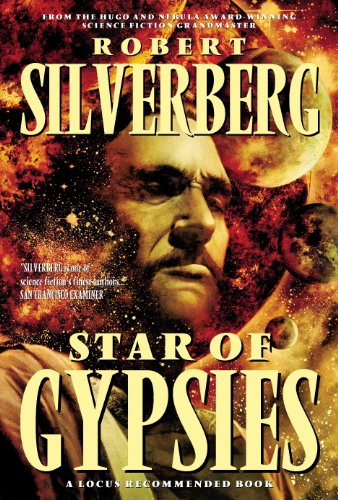
Star of Gypsies — (1986) Publisher: Yakoub was once the legendary King of the Rom, the Gypsy race that has evolved from the days of caravans into lords of the spaceways — the only pilots capable of steering ships safely between the many worlds of the Galaxy. Weary and proud, Yakoub has relinquished his power and lives in exile on a distant, icy world. In his absence, chaos fills the vacuum of power. The fate of the entire Galactic Empire hangs in the balance. Yakoub must journey across the cosmos and fight to regain his throne. Only then can he fulfil his dream — to return his people to their ancestral home of Romany Star. The Rom need the Yakoub of legend once more. Can the once-mighty King overcome time and tyranny and inspire his people in their darkest hour?
To the Land of the Living — (1989) Publisher: Set in an Afterworld — where everyone who has ever lived reawakens when they die to live again and die again, seemingly for ever — this novel tells of the warrior-king Gilgamesh’s journey in search of a gateway to the land of the living. Based on the author’s novella “Gilgamesh in the Outback”.
The Mutant Season — (1989) With Karen Haber. Publisher: Starting in the 1400s, children with gold-colored eyes and strange abilities — telepathy, telekinesis, and the like — began to be born into the world. For centuries, these “mutants” kept themselves hidden for fear of persecution, but in the latter part of the 20th century, they found more and more acceptance among the rest of society. But now, in 2017, the murder of a prominent politician brings the “mutant” population into direct conflict with “normal” people, and the outcome will forever change the planet.
Letters from Atlantis — (1990) Publisher: It was a legendary island, a fantastic island. Atlantis. Or as its prince called it, Athilan. Roy had traveled through time with his partner, Lora, to find it — and now he was tantalizingly close to its shore. Time travel allowed Roy’s consciousness to enter the mind of the heir to Atlantis’ throne, and what he found disturbed him. Strange dreams. Impossibly futuristic inventions and machines. How could such an advanced city exist at this time? The rest of the world was, as Lora witnessed in her travels, a dark, barbaric land still thawing from the ice age. Roy had been preparing for the odd isolation of time travel, but nothing had prepared him for his final arrival on Atlantis — a shimmering city far beyond his imagination! Roy knew this island’s fate. According to legend, it would vanish into the sea. Roy also knew he had a limited amount of time to decipher the strange message in the Prince’s mind — visions of cataclysmic events, mysterious rites to a faraway star. If Roy was in an Atlantis unlike anything the researchers had predicted, then what were its secrets? And when would it be destroyed? 
The Face of the Waters — (1991) Publisher: Silverberg, winner of four Hugos and five Nebulas, presents a riveting tale of an epic voyage of survival in a hostile environment. On the watery world of Hydros, humans live on artificial islands and keep an uneasy peace with the native race of amphibians. When a group of humans angers their alien hosts, they are exiled — set adrift on the planet’s vast and violent sea.
Kingdoms of the Wall — (1992) Publisher: The village of Jespodar nestles in the foothills of a world-dominating mountain known to all as “The Wall.” Poilar Crookleg has grown up in Jespodar training hard and hoping that he will be chosen for the annual Pilgrimage, a group journey to the top of the mountain from which no pilgrim has ever returned both alive and sane. The pilgrims seek to replicate the legendary journey of a distant ancestor who scaled the mountain and, so the story goes, met with the gods. The Pilgrimage is a a life journey, an overwhelming challenge and a sacred honor and Poilar feels blessed when he is finally chosen to lead it.
But not all is as it first seems. Along the journey lie hazards of all kinds, both vilently dangerous and seductively beguiling and to triumph in the climb is to confront a revelation so surprising and so disturbing that none, not even the smartest and best prepared, are likely to survive. What belief and what devotion leads so many to hope for such a challenging task and what will be the ultimate result of such dedication? Only The Wall itself can reveal the destiny for those who undertake the Pilgrimage.
Thebes of the Hundred Gates — (1992) Publisher: Edward Davis, a rookie of the Time Service, has already made several successful jumps to the past. Now he is given his most important mission. Two members of the Service have disappeared in ancient Egypt and Edward Davis’s assignment is to locate and rescue them. But is he ready for all that Egypt has to offer and for the surprising truths he discovers as he explores this ancient land of myths and mysteries — truths that jeopardize his own mission and return back to the future?
Hot Sky at Midnight — (1993) Publisher: Several decades into the future, the long series of corporate and government decisions has left the Eath in a state of disaster, almost uninhabitable. The icecaps have melted. The ozone layer is destroyed. A few areas are livable with the help of breathing masks and injections to protect the skin. The only true refuge, for all who can afford it, has become the near-space orbital colonies built and run by private companies and open only to those who are willing and able to pay. Valparaiso Nuevo is one of these colonies. Run by a shadowy dictator known only as the Generalissimo, it exists as a haven for hustlers, conspirators and people looking for an edge. Victor Farkas, operative of the megacorporation Kyocera-Merck Ltd., is blind but gifted with hypersensitive “blindsight.” He comes to Valparaiso Nuevo in search of a renegade geneticist of legendary skill. Back on Earth, Nick Rhodes, head of Samurai Industries, which attempts to breed humans that can thrive in the horrendous conditions on Earth, struggles with his conscience as he manipulates genetic structures and lives. Paul Carpenter works for a Japanese mega-corporation, seeking promotion and survival, but loses his job as a ship captain after a mutiny. As these men’s lives intersect with Jolanda — a talented sculptor, a passionate lover and a secret plotter — they find themselves embroiled in a scheme to take over Valparaiso Nuevo. Their goals may be individually motivated but the deadly combination of ambition, distrust, greed, stupidity, and lust leads toward a dramatic conclusion. In HOT SKY AT MIDNIGHT, a bleak picture of future Earth and a complex plot peopled with dark, rich characters, come together as one of Silverberg’s finer novels.
Starborne — (1995) Publisher: Is utopia a death sentence for mankind? Does living in a perfect world destroy all that makes us human? Fifty men and women, living prefect lives, decide to give it all up to embark on the adventure of a lifetime. Equipped with enough genetic material to populate a new planet, these fifty set out to travel to the farthest reaches of the galaxy, with their only link to home a fragile telepathic bond between a blind crew member and her sister back home. Starborne is a thoughtful, introspective look by one of the Grand Masters of science fiction at what it means to be human and to live a life of meaning.
The Realm of Prester John — (1996) Publisher: The famous science fiction writer pieces together the life history of the myth of Prester John, the Christian potentate of the East, Emperor of Ethiopia… a romantic and fabulous tale ‘As exotic and complex as a mosaic in a Coptic chapel’ San Francisco Chronicle.
The Alien Years — (1998) Publisher: It Was The Worst of Times… Fifteen feet tall, the Entities land in cities across Earth. Ignoring humankind, they wall themselves in impenetrable enclaves, enslaving a few willing collaborators with their telepathic PUSH. Then they plunge humans into a new Dark Age without electricity, allowing us to live — but no longer as a dominant species. But a few refuse to submit to fate, including the Carmichael family, whose patriarch, an aging colonel devoted to resistance, will inspire a daring new generation of dissidents. United in spirit, these diverse rebels — an aging hippie, a cold-blooded Muslim assassin, a prodigal son, and a renegade hacker — will carry on the colonel’s legacy as they attempt to kill the mysterious Prime Entity and free the planet.
Shadow on the Stars — (2000) Publisher: A THRILLING ADVENTURE that ranges across time and space, pitting one man against a invading alien horde that threatens a colony world, and against a hidden conspiracy to conquer Earth. Blair Ewing must battle Klondi hordes, Sirian plotters, the forces of history, and the nature of time itself. It’s a lot to ask of one man — but supposing there were more than one? This classic early Silverberg novel folds an exploration of time-travel paradoxes into the story of one man’s fight to save two worlds at once.
Cronos — (2001) Publisher: From the man who has won more Hugo and Nebula Awards than any other author in the history of fantastic literature, three complete novels that embody the concept of time travel. LETTERS FROM ATLANTIS Time travel has allowed Roy’s consciousness to enter the mind of the heir to Atlantis’s throne. But if he was in an Atlantis unlike anything the researchers had predicted, then what were its secrets? And when would it be destroyed? PROJECT PENDULUM The nature of time mechanics requires that the two travellers’ masses be precisely matched; for that reason, the first time travellers must be a pair of identical twins. What neither planned on, however, was how the inhabitants of those times would react to their presence… THE TIME HOPPERS In the 25th century, the only escape from suffocation in a totally controlled environment is to ‘hop’ backward through time. However, since time-hopping is outlawed, it must be stopped — but not too quickly. For the history of the 1970s includes the arrival of hoppers who have not yet left the 2490s!
The Longest Way Home — (2002) Publisher: One of the most renowned and respected literary artists in the field of science fiction, Robert Silverberg transports us once again to a spectacular, deftly conceived world in transition — and propels us on a remarkable odyssey of survival and self-discovery.The Longest Way Home The Folk were first to arrive on this faraway planet, pushing aside the docile, intelligent aboriginal races they encountered. The ‘Masters “followed to subjugate the careless, complacent fellow humans who preceded them here. And so it has remained for ages… Fifteen-year-old Joseph Master Keilloran has known only privilege, respect, and civility. Born to take over the reins of House Keilloran when he comes of age, he awakens one night in the Great House of distant relatives to the thunder of battle — a terrifying din that has not been heard on this peaceful world since the original Conquest. All around him are devastation and death, as the local Folk rise up to wreak vengeance on the unsuspecting, unprepared Masters. With the aid of a stillfaithful servant, Joseph barely escapes with his life. But now he is stranded and alone 10,000 miles from his home.Damned by his birth and class — surrounded by enemies who would kill him if they found him — Joseph must now embark on a journey of unimaginable distance toward a home that may also already be in ruins. His odyssey will be more terrible — and more wondrous — than he ever imagined, as a world he was kept sheltered from comes alive before him. Venturing deep into the lives and cultures of remarkable Indigene peoples — driven to hunt, scratch, and scheme for his survival — a resourceful young Master mill be created anew as he is forced to reassess his homeworld and his place in it. Despite what is waiting for him at the finish, nothing here will ever be the same again. And Joseph will become a man before his long journey ends.
Roma Eterna — (2003) Publisher: No power on Earth can resist the might of Imperial Rome, so it has been and so it ever shall be. Through brute force, terror, and sheer indomitable will, her armies have enslaved a world. From the reign of Maximilianus the Great in A.U.C. 1203 onward through the ages — into a new era of scientific advancement and astounding technologies — countless upstarts and enemies arise, only to be ground into the dust beneath the merciless Roman bootheels. But one people who suffer and endure throughout the many centuries of oppressive rule dream of the glorious day that is coming — when the heavens themselves will be opened to them… and the ships they are preparing in secret will carry them on their “Great Exodus” to the stars.
When We Went to See the End of the World — (2012) Publisher: Before The Road, by Cormac McCarthy, brought apocalyptic fiction into the mainstream, there was science fiction. No longer relegated to the fringes of literature, this explosive collection of the world’s best apocalyptic writers brings the inventors of alien invasions, devastating meteors, doomsday scenarios, and all-out nuclear war back to the bookstores with a bang.The best writers of the early 1900s were the first to flood New York with tidal waves, destroy Illinois with alien invaders, paralyze Washington with meteors, and lay waste to the Midwest with nuclear fallout. Now collected for the first time ever in one apocalyptic volume are those early doomsday writers and their contemporaries, including Neil Gaiman, George R. R. Martin, Lucius Shepard, Robert Sheckley, Norman Spinrad, Arthur C. Clarke, William F. Nolan, Poul Anderson, Fredric Brown, Lester del Rey, and more. Relive these childhood classics or discover them here for the first time. Each story details the eerie political, social, and environmental destruction of our world.