Next Author: Gordon R. Dickson
Previous Author: Peter Dickinson

Are we missing a book that should be on this page? Please submit.

Philip K. Dick

Philip K. Dick(1928-1982)
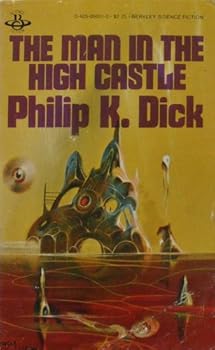
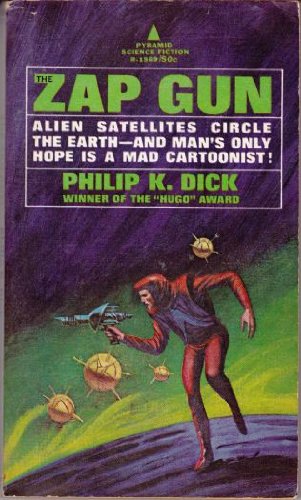
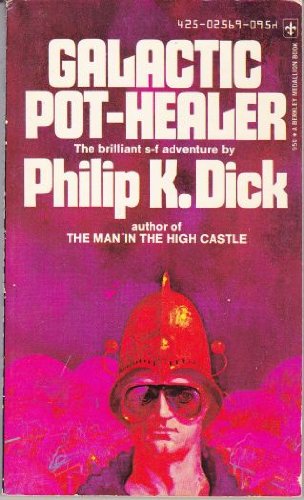
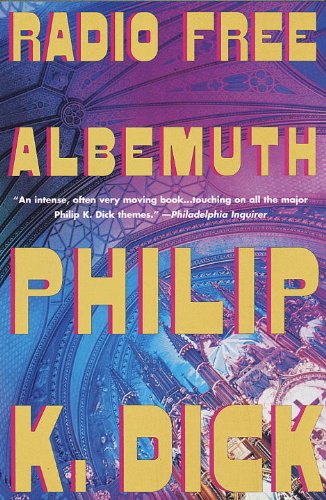
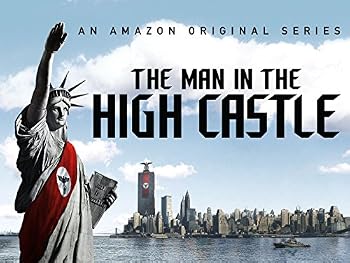
Philip K. Dick was born in Chicago in 1928, but lived most of his life in California. He began reading science fiction when he was 12 and was never able to stop. He briefly attended the University of California, but dropped out before completing any classes. In 1952, he began writing professionally, writing numerous novels and short-story collections. He won the Hugo Award for best novel in 1962 for The Man in the High Castle and the John W. Campbell Memorial Award for best novel in 1974 for Flow My Tears, the Policeman Said. Learn more at the Philip K. Dick website.

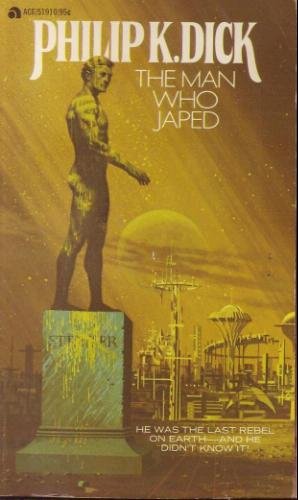
The Man Who Japed: One of PKD’s first novels

The Man Who Japed by Philip K. Dick

In 2114, Allen and Janet Purcell live in Newer York, a post-apocalyptic city that strictly regulates morality so that all citizens understand exactly how to fit in. Robotic spies film suspect behavior and turn it in to the committee members who are in charge of renting out apartments to law-abiding citizens. Citizens who get drunk, curse, or engage in sexual or other misconduct are brought to trial by the peers who live in their apartment complexes. A guilty verdict usually means losing your lease and having to move to one of the faraway planets that supplies Earth with food.

Allen Purcell has just been offered the top position in the government’s ad agency which produces propaganda meant to maintain public ethics. The job is very prestigious, but there’s only one problem: The night before, in his sleep, he japed (made a joke of) the statue of General Streiter, the man who started the curren... Read More

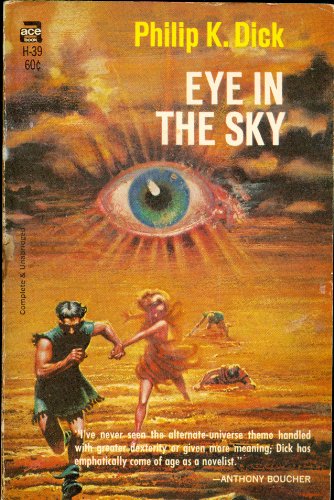
Eye in the Sky: Very early PKD

Eye in the Sky by Philip K. Dick

Jack Hamilton has just lost his job as an engineer for a government defense contractor because his wife Marsha is a suspected communist sympathizer. Having nothing better to do for the afternoon, he accompanies Marsha to the viewing of a new linear accelerator. An accident at the accelerator beams the Hamiltons and six other unsuspecting citizens into a parallel universe that at first appears to be their world but soon starts to evince subtle differences that become more and more obvious as time goes on. There is some sort of “corny Arab religion” at work — God is all justice and no mercy so, for example, telling a lie brings down an immediate curse such as a bee sting.

There are miracles here that can be taken advantage of, such as a cigarette machine that Jack, a darn good engineer, manages to rig up to produce unlimited supplies of excellent brandy, but generally this is an uncomfortable w... Read More
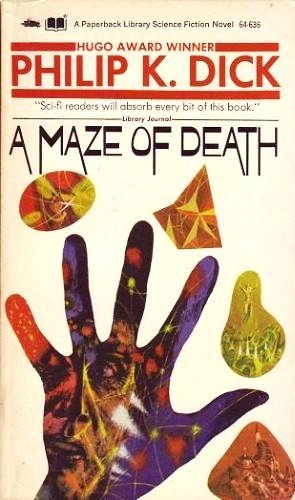
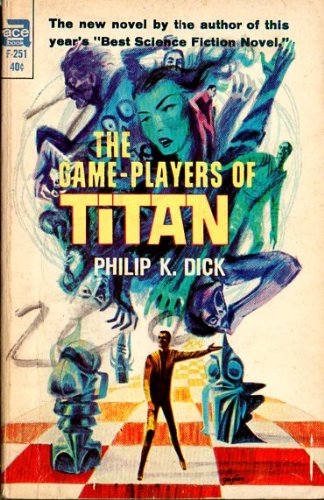
The Game-Players of Titan: Fun for a while

The Game-Players of Titan by Philip K. Dick

After a devastating atomic world war, the humans of Earth have mostly killed each other off. Only about a million remain and most are sterile due to the radiation weapons developed by the Germans and used by the “Red Chinese.” Some humans now have telepathic abilities, too.

The alien Vugs of Titan, taking the opportunity to extend their domains, are now the Earth’s rulers. They seem like benevolent conquerors and overseers. For their amusement, they allow human landowners (“Bindmen”) to play a game called Bluff, which is much like Monopoly where the stakes are real pieces of property on the ruined Earth. The Vugs, who seem (but may not be) intent on not allowing the human race to die out, also use the game to mix up couples, hoping to serendipitously find viable breeding pairs. Any Bindman can play in the district where they own property, using their land and spouse for stakes in the game.... Read More
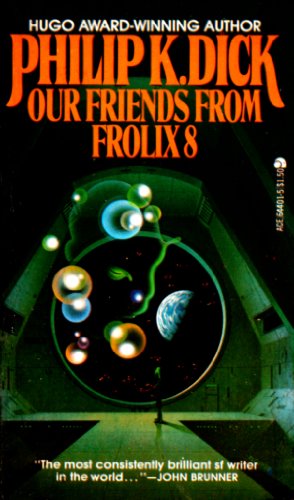
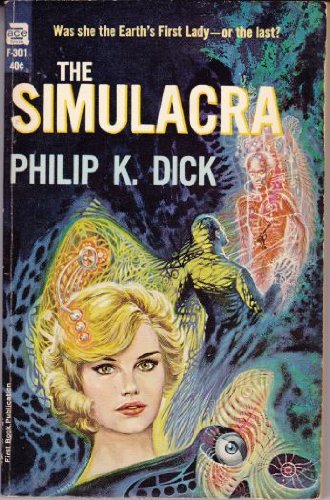
The Simulacra: Chaotic and zany

The Simulacra by Philip K. Dick

Philip K. Dick is one of those authors who I often enjoy reading for his peculiar ideas, cool technologies, bizarre plots, and neurotic characters. But every time I read one of his stories, I need a break from him — there’s a feeling of frantic paranoia permeating his work that makes me feel like I just need to chill out for a while. If you’ve seen the movie The Adjustment Bureau, which was based on one of his stories, you’ll know what I mean. In that story, the main character discovers that the reality he thought he knew was totally wrong. Instead, there is something big going on behind the scenes and his life is being manipulated by The Unseen People Who Are Really In Charge (TUPWARIC).

This theme is common in PKD’s stories, and The Simulacra is another example. The government of the United States of Europe and America, which appears to be a matriarchy,... Read More
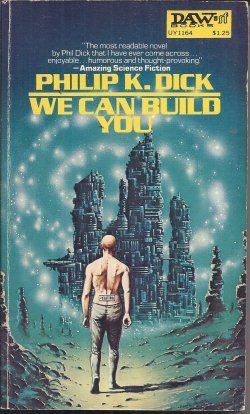
Now Wait for Last Year: Unusually emotional

Now Wait for Last Year by Philip K. Dick

Earth is allied with the planet Lilistar against the alien Reegs. Gino Molinari, the leader of Earth’s forces, has just hired Eric Sweetscent as his personal physician. For his new job, Eric has to leave his wife Kathy, who has just become addicted to a new hallucinogenic drug. Eric is glad to leave, though, because he and Kathy aren’t getting along.

When Eric arrives at Gino Molinari’s side, he finds that the man has some strange health issues. At first Eric thinks Mr. Molinari is a paranoid hypochondriac until he discovers that he has survived numerous bouts of cancer. Soon there are other strange discoveries about Molinari’s health that baffle Dr. Sweetscent. When he finds out that the drug that Kathy’s hooked on came from off-world and causes its users to travel through time, he wonders if her drug addiction and Gino Molinari’s bizarre symptoms could be related. He also star... Read More

The Crack in Space: Fun, but not up to par with the best PKD

The Crack in Space by Philip K. Dick

In Philip K. Dick’s The Crack in Space (1966), American technology and civilization has advanced so far that citizens can easily take a spaceship to make daily visits to an orbiting satellite whorehouse, personal Jifi-scuttlers are used to warp space/time so that people can quickly travel from home to work in a distant city, and overpopulation is such a public concern that millions of dispossessed Americans have chosen to be put in cryogenic storage until a habitable planet is discovered.

Yet, America has not advanced so far in other respects. It’s 2080, racism is still rampant, and Jim Briskin is hoping to be elected as the first African-American President. He needs to convince both the “Caucs” and the “Cols” (oh, what horrible nicknames!) that he’s the best man for the job. This isn’t always easy to do for a principled man who isn’t willing to aband... Read More

Counter-Clock World: PKD is in a class of his own

Counter-Clock World by Philip K. Dick

It’s 1998 and time has started running backward. Aging has reversed so that people are gradually getting younger, and dead people are awakening in their graves and begging to be let out. The excavating companies have the rights to sell the people they unbury to the highest bidder. When Sebastian Hermes’s small excavating company realizes that Thomas Peak, a famous religious prophet, is about to come back to life, they know that getting to him first could be a huge boon to their business. The problem is that there are other organizations that prefer for Thomas Peak to stay dead, especially when they realize he may have information about the afterlife.

Philip K. Dick is in a class of his own and it’s hard to compare his novels to anyone’s but his own. Maybe it’s not fair, but there are certain expectations we have for other novelists that don’t apply when we read PKD. Most importantl... Read More
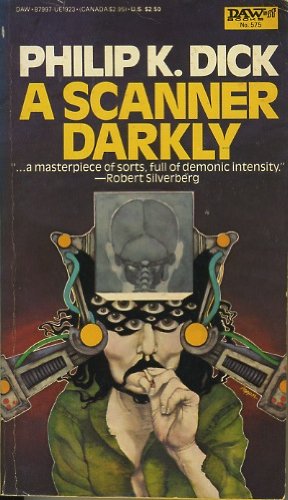
Ubik: Use only as directed

Ubik by Philip K. Dick

Warning: Use only as directed. And with caution.

Written in 1969, Ubik is one of Philip K. Dick’s most popular science fiction novels. It’s set in a future 1992 where some humans have develop psi and anti-psi powers which they are willing to hire out to individuals or companies who want to spy (or block spying) on others. Also in this alternate 1992, if you’ve got the money, you can put your beloved recently-deceased relatives into “coldpac” where they can be stored in half-life and you can visit with them for years after their death.

As Ubik begins, Glen Runciter, the head of one of New York City’s top anti-psi organizations, discovers that all the operatives of the top psi organization (whose telepathic fields they like to keep track of) have disappeared. This means less work for Runciter’s employees ... Read More

Ubik: It’s a Philip K. Dick novel

Ubik by Philip K. Dick

Ubik, by Philip K. Dick, is, well, a Philip K. Dick novel. By that, I mean it has just what one would expect from PKD. Characters, and readers, lost as to what is real and what is not? Check. Sense of world and time out of joint? Check. Characters who feel something is after them, some malevolent force? Check. Drugs. Psi-powers. Attacks on consumerism. An ending that leaves you even more confused. Check. Check. Check. And oh yes, check.
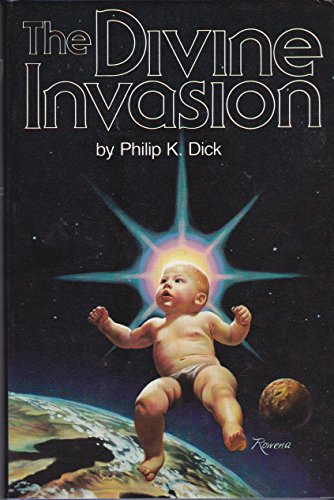
Summarizing a Dick novel can be an exercise in futility. Without experiencing it in its entirety, it can sound wholly absurd (not that Dick shies away from the absurd, mind you). But here goes anyway. Glen Runciter runs the best anti-psi business going in 1992, with an especially worried focus on his arch-nemesis Hollis, who seems to run the best psi (telepath, pre-cog) organization going. At the start of the novel, many of Hollis’s top telepaths have disappeared, leaving Runci... Read More
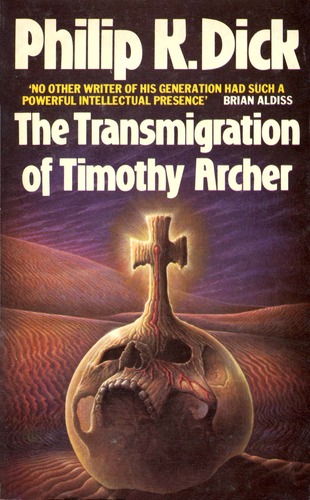
Lies, Inc: PKD’s most inaccessible novel?

Lies, Inc by Philip K. Dick

In the early 21st century, Earth has become overcrowded and has begun to look toward space as a potential new home. Only one habitable planet has been found — Whale’s Mouth — and it’s said to be a paradise. Rachmael ben Applebaum’s company has developed a spaceship that will take settlers there, but the trip takes 18 years. Just as business is about to begin, it’s undercut by Trails of Hoffman, Inc., a company who has developed a new teleporting technology that will get settlers to Whale’s Mouth in only 15 minutes. The only catch is that it’s a one-way trip — once you leave, you can’t come back. Ben Applebaum, whose company has been financially devastated by this new technology, discovers that the videos of happy settlers have been faked and thinks there’s something nefarious going on at Whale’s Mouth. After all, Trails of Hoffman is run by Germans, and their eugenic ideas have not been forgott... Read More

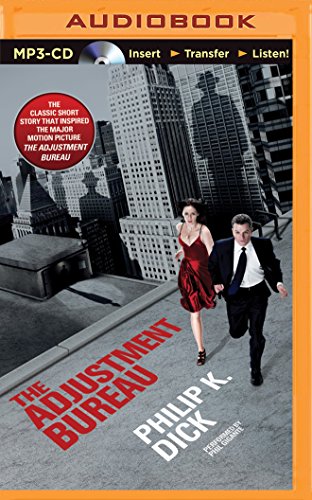
The Adjustment Bureau: 57 minutes for $11… seriously?

The Adjustment Bureau by Philip K. Dick

Brilliance Audio has recently put Philip K. Dick’s short story The Adjustment Team on audio and they sent me a copy. This is the story that the movie The Adjustment Bureau was based on (and the name of the audiobook is The Adjustment Bureau). The story is 57 minutes of tension and psychological terror as Ed Fletcher gets to work late and accidentally sees The Adjustment Team “adjusting” his office building and its occupants. Now, unadjusted Ed notices all the differences in his environment but his adjusted colleagues think everything is normal. Is Ed crazy?

Phil Gigante does an excellent job reading this story — the drama and terror really comes across well.  I enjoyed “The Adjustment Team,” I’m glad I’ve finally read the story that the popular movie was based on, and I’m particularly happy to be able to listen t... Read More

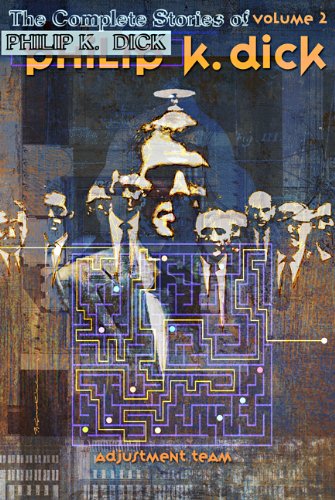
The Collected Stories of Philip K. Dick Volume Two: Adjustment Team (1952-1953)

The Collected Stories of Philip K. Dick Volume Two: Adjustment Team (1952-1953) by Philip K. Dick

Philip K. Dick wrote 121 short stories over his career, mostly for science fiction magazines. Subterranean Press has been collecting them in chronological order over several volumes. The first volume, The King of the Elves, contained 22 stories spanning the years 1947-1952. This second volume, Adjustment Team, covers the years 1952-1953 and includes 27 stories with notes that make up approximately 488 pages.

Many of these stories use themes that were common in 1950s SF shorts — space exploration, the cold war, racism, xenophobia, and the fear of atomic war and radiation. Like the stories of Ray Bradbury and other popular writers of the time, Dic... Read More

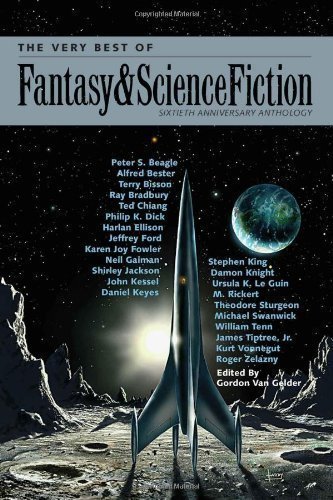
The Very Best of Fantasy & Science Fiction: Sixtieth Anniversary Anthology

The Very Best of Fantasy & Science Fiction: Sixtieth Anniversary Anthology by Gordon Van Gelder (ed.)

The Very Best of Fantasy & Science Fiction: Sixtieth Anniversary Anthology is an excellent collection of 23 stories picked from the treasure trove of short fiction that's been published in the eponymous magazine over the past 60 years. Editor Gordon Van Gelder — also the editor of the magazine since 1997 — has done an admirable job, picking stories that illustrate the diversity of both the genre and the magazine. As such, this is a great anthology for SF&F fans as well as newcomers looking for a taste.

The line-up of authors in this collection looks like a veritable Who's Who of speculative fiction: Ray Bradbury, Read More

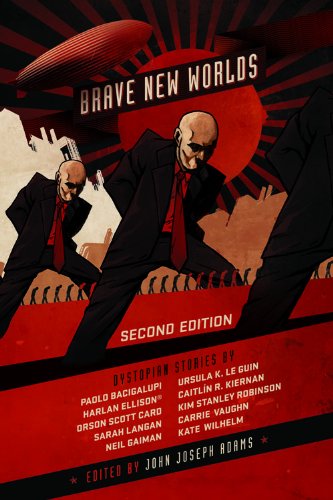
Brave New Worlds: Dystopian Stories

Brave New Worlds: Dystopian Stories edited by John Joseph Adams

Even people who don’t usually read science fiction will often be familiar with a few classic titles in the “dystopian SF” sub-genre. After all, 1984, Fahrenheit 451, and of course the famous Aldous Huxley novel Brave New World are some of the few SF titles that have entered the mainstream literary canon to such an extent that they’ve become assigned school reading for many students. However, novel-length dystopian SF didn’t stop with those venerable classics, and can even be said to be thriving at the moment. See, for example, the recent success of Paolo Bacigalupi’s debut The Windup Girl Read More

Brave New Worlds: Second edition of an excellent anthology of dystopian fiction

Brave New Worlds (second edition) edited by John Joseph Adams

This anthology of dystopian fiction, edited by John Joseph Adams, contains stories from some of the greatest names in fantasy and science fiction, including Ursula K. LeGuin, Paolo Bacigalupi, Cory Doctorow and Kim Stanley Robinson. The first edition was reviewed by Stefan Raets and earned a five-star rating. I picked up the second edition to see what the new volume added.

What I found was that the entire first edition was intact. Three stories were added, along with a study guide featuring questions for some of the stories if you wanted to use this in a book club (I w... Read More

Array ( [SERVER_SOFTWARE] => Apache [REQUEST_URI] => /fantasy-author/dickphilipk/ [DOCUMENT_ROOT] => /home3/fantatn0/public_html [GATEWAY_INTERFACE] => CGI/1.1 [HTTP_ACCEPT] => text/html,application/xhtml+xml,application/xml;q=0.9,*/*;q=0.8 [HTTP_ACCEPT_ENCODING] => gzip [HTTP_ACCEPT_LANGUAGE] => en-us,en-gb,en;q=0.7,*;q=0.3 [HTTP_CF_CIP_TAG] => 0 [HTTP_CF_CONNECTING_IP] => 23.22.212.158 [HTTP_CF_IPCOUNTRY] => US [HTTP_CF_RAY] => 72c0d0c99a902ba [HTTP_CF_VISITOR] => {\"scheme\":\"http\"} [HTTP_CF_WAN_ENCODING] => 0 [HTTP_CF_WAN_ID] => 0 [HTTP_CONNECTION] => Keep-Alive [HTTP_HOST] => www.fantasyliterature.com [HTTP_USER_AGENT] => CCBot/2.0 [HTTP_X_FORWARDED_FOR] => 23.22.212.158 [HTTP_X_FORWARDED_PROTO] => http [PATH] => /bin:/usr/bin [QUERY_STRING] => [REDIRECT_STATUS] => 200 [REDIRECT_URL] => /fantasy-author/dickphilipk/ [REDIRECT_W3TC_ENC] => _gzip [REDIRECT_file_gzip] => /ramdisk/cpud/status [REMOTE_ADDR] => 23.22.212.158 [REMOTE_PORT] => 55903 [REQUEST_METHOD] => GET [SCRIPT_FILENAME] => /home3/fantatn0/public_html/index.php [SCRIPT_NAME] => /index.php [SERVER_ADDR] => 69.195.124.64 [SERVER_ADMIN] => [email protected] [SERVER_NAME] => www.fantasyliterature.com [SERVER_PORT] => 80 [SERVER_PROTOCOL] => HTTP/1.1 [SERVER_SIGNATURE] =>
Apache Server at www.fantasyliterature.com Port 80
[file_gzip] => /ramdisk/cpud/status [PHP_SELF] => /index.php [REQUEST_TIME] => 1369252390 [argv] => Array ( ) [argc] => 0 )