
1127 Fantasy Authors New Fantasy Releases
FanLit Reviewers
Other FanLit Stuff HOME
Fantasy Literature's Fantasy Book Reviews

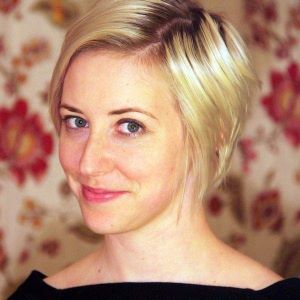
By Stephen (SB) Frank. Today, we are pleased to welcome fantasy author Rachel Vincent. Rachel is the author of two outstanding fantasy series: SHIFTERS and the YA series SOUL SCREAMERS. Shift, the latest novel in Rachel’s Shifter’s series, starring werecat Faythe Sanders, which went on sale this week. Please join us today in welcoming Rachel and be sure to comment on this post for a chance to win a copy of Shift, which she is graciously donating.

SB Frank: In your SHIFTERS series, I really enjoy how Faythe is constantly challenging traditional female role models in the Pride. In Prey, I think it was, Faythe finally began to understand and accept the vital role that her mother had played in the Pride despite not having a formal position except as the Alpha’s wife. As the pride politics turn deadly, does her mother’s role in the pride continue to grow and expand? Or how do you see that playing out?

Rachel Vincent: Yes, I think it does. She’s always had a vital role; she’s just been content to play it behind the scenes for most of Faythe’s life. But in the first chapter excerpt of Shift (available on my website) we get a glimpse at how strong Karen Sanders can be, and where Faythe gets her mouth.

SB Frank: Do you see yourself as a champion for female independence in other areas of your life besides your writing?

Rachel Vincent: Oh, I don’t see myself as a champion for anything. My job is to entertain. But if you’re looking for more than just an exciting read, the SHIFTERS series can be read as a commentary on gender and racial equality and the importance of fighting for both. Or, it can just be read for fun. Grin

SB Frank: I understand that you have two cats, Kaci and Nyx. Do their personalities or quirks ever find their way into your fictional werecat characters?

Rachel Vincent: No, not really. My werecats are cat instincts, human brains, and a mix of social norms. My house cats just want to eat and lie around all day. Nyx is very cuddly, though. And Kaci’s very stately and standoffish.

SB Frank: Aw. They sound adorable. We’re huge cat lovers around here. Your website, www.rachelvincent.com, says that you are a recent transplant into the deep south. I personally am a US expatriate now living abroad in Texas. Where are you transplanted from? And how do you like living in the South?

Rachel Vincent: I lived in Oklahoma for the first eleven years of my adulthood, then spent almost a year in Louisana, which is where I lived when I wrote that bio. But now I live in San Antonio, and I love it! There’s a great mix of cultures, generally warm weather (though I’m expecting a sweltering summer), and soooo many restaurants to choose from. And there’s a Godiva store three miles from my house. What more could a person want?  Grin

SB Frank: I know that San Antonio is one of our family’s fun vacationing spots, though we haven’t hit the Godiva store yet.  In addition to your werecats novels, you also have a very popular YA series, SOUL SCREAMERS, with two books released so far, My Soul to Take and My Soul to Save.  Do you find it difficult to write for a YA audience? More satisfying?

Rachel Vincent: It’s not that the YA audience is more difficult to write for, but since I’m newer at writing YA than writing for adults, I want to make sure I get it right. So a lot of extra time, energy, and stress goes into my YA novels, and I stress a lot more over the reviews.

SB Frank: Ah, those YA reviews, I get them in my household constantly, and it can be quite stress inducing …and at times strident.  So, what’s next for you? Do you plan to continue these series for a while or to move on to another project?  Anything exciting in the works?

Rachel Vincent: The SHIFTERS series draws to a close this October, with the release of Alpha, the sixth and final book. But the SOUL SCREAMERS will continue (I’m currently contracted through book 5) and I have a new adult series coming up next year. So… I’m definitely staying busy.

SB Frank: Wow. Congratulations on all the great news. I, for one, am rushing out to read Shift and have the the SOUL SCREAMERS on my to-read list.

And for our visitors today, remember to comment on today’s post for a chance to win your own copy of Shift or if you can’t wait that long, buy it now and we’ll let you choose an alternate prize from the Fanlit Stacks. Justin will announce winners next week.

by Stephen (SB) Frank

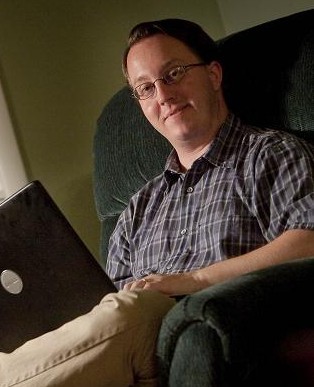
We are pleased today to welcome Anton Strout, author of the Simon Canderous urban fantasy series.  His latest novel, Dead Matter, goes on sale today. Mr. Strout has graciously offered to give away two novels to commenters on today’s post. Winners can choose between any of his novels:

SB Frank: Welcome Anton! On your website http://antonstrout.com, you have the most intriguing factoid. You write that you are the co-creator of the faux folk musical Sneezin’ Jeff & Blue Raccoon: The Loose Gravel Tour (winner of the Best Storytelling Award at the First Annual New York International Fringe Festival). Can you tell us a little bit about the musical, about the festival, and about the award?

Anton Strout: The NY Inter Fringe Festival is a downtown arts festival that happens in every conceivable venue that can be claimed.  It’s guerrilla theater at its finest, hundreds of shows every hour of the day… Sneezin’ & Blue are two faux folk heroes bases on old school folkies like Ramblin’ Jack Elliot and the Guthries, Arlo and Woody.  They’re modern day folk heroes who spend more time telling a story and tuning their guitars than actually getting to a song.  I play Blue, who was given his name out on the Pueblo, sort of an animal totem name.  He’s an eager to please guitar playing sidekick, and he must be doing something right because they took the Storytelling award.  Other notable shows to come out of the Fringe are Rent and Avenue Q, I believe.  Sadly, to date, Sneezin’ and I have not been asked to be on Broadway.

SB Frank: On the subject of Broadway, you also say that you’re a sometimes actor and sometimes musician. Can you tell us a little about both hobbies?

Anton Strout: Sure.  When I moved to Manhattan fifteen years ago, I came here from small town life in Western Massachusetts.  I went to college for English and Theater. I always knew I wanted to be in New York City, with my small town boy mentality of “I’m gonna BE somebody!”  I wasn’t sure if it would be acting, music or writing, but I knew I wanted to entertain somehow.  So I dabbled in a bit of everything.  I’ve played a lot of instruments over the years, most of them mediocre-ly but I was a pretty good guitarist so I was in several bands.  Also acted a bit in off Broadway shows… but it was the writing that really stuck out of everything.  I enjoy the rejection cycle of it better.  With acting, you audition constantly and face constant rejection.  As a writer, you can go for a long time writing something before you have to deal with potential rejection.  That suits me better.  Not that my writing gets rejected all that often nowadays….

SB Frank: The third novel in your SIMON CANDEROUS series, Dead Matter, comes out today. Have you got any celebratory traditions that you do on book release days? Drinking champagne, dancing naked in the streets, checking out Amazon sales rankings?

Anton Strout: After reading/seeing Paul Sheldon’s rituals in Misery, I decided not to have any traditions, lest I be kidnapped by my “number one fan,” taken to a secluded location and forced to write fan fiction of my own books under threat of hobbling.  In truth, I get so busy with promoting the new book, turning in/ revising the next book, writing proposals for new books that it’s hard to find time to celebrate!  I try to throw a party for all the people who worked on the book for the past year at my publisher, but even that gets kinda crazy to put together.  I do find time to obsess over the Amazon sales ranking, though.  I’m convinced it is a random number generated just to mess with the rampant insecurity that most authors have.  I’m thinking of cutting off my Refresh button finger because of it…

SB Frank: So, Simon Canderous, the protagonist of this series, is a psychometrist who works for the NY Department of Extraordinary Affairs, Other Division. Throughout this wacky series, he has to defeat red tape and the forces of darkness, when the latter are not crushing on him, that is. For those of our readers who may not be as familiar with the series, can you give us the flavor of what you’re going for? And while you’re at it, can you give us a preview of Dead Matter, which I understand has recently been rated with 4.5 stars by the Romantic Times!

Anton Strout: I came to New York in the mid 90s, and like the character Jane Clayton-Forrester in my books, I did a lot of temp jobs working in corporate America.  It’s so mundane and filled with all the red tape and trappings of business culture.  I started to wonder what would happen if it were overlayed on a world that had to contend with fighting ghosts, demons and cultists.  Some have called the series a blend of Ghostbusters meets Men in Black, and I think that’s a fair comparison, except I’d say there’s a bit of corporate droneship and paperwork from Terry Gilliam’s Brazil thrown in as well.  I’m both thrilled and saddened when people tell me they totally either totally get or actually work in the office environment that the Department of Extraordinary Affairs functions within.

SB Frank: Myself, I’m almost reminded of a Dilbert comic strip or the enigmatic movie, Office Space, which I somehow thoroughly enjoyed.  Going back and forth between battling evil monsters and then filling out the paperwork justifying why you did it, is a riot. Thank you so much for visiting today. We wish you the best of luck with today’s release.

Remember two commenters will receive their choice of an Anton Strout novel, or if you prefer, we’ll let you choose an alternative from our stacks. So be sure to comment. I’ve just finished reading Dead Matter and think fans of funny, urban fantasy will be greatly entertained.

by RKCharron
We’re big fans of C.S. Friedman (see our reviews here) and are pleased to present this interview which was conducted for FanLit by our friend R.K. Charron. Thanks, RK! Commenters will be eligible to win the audiobook version of METAtropolis which was edited by John Scalzi.


Celia S. Friedman was born in 1957. She is the author of the SF novels In Conquest Born, The Madness Season, and This Alien Shore, and the highly acclaimed SFF trilogies THE COLDFIRE TRILOGY (Black Sun Rising, When True Night Falls, and Crown of Shadows), and THE MAGISTER TRILOGY (Feast of Souls, The Wings of Wrath, and the forthcoming Legacy of Kings).

At age 14 she began to design an interstellar universe complete with warring nations and a 10,000 year history. This work would later become the core of the background material for her first published novel, In Conquest Born. And then one day in 1983 “it” happened. She had spent the whole night in a writing frenzy, turning out 30 pages that (in hindsight) were clearly inspired by the bitterly cold, ice-bound Rochester winter. She looked at them in the bleary light of dawn and read them again and thought, “Damn, this is good. This is good enough to sell.” (Chapter 11 of In Conquest Born).

Moving to Winchester Virginia, to teach at Shenandoah University, she set aside a summer to turn her stories into a novel which she could submit for consideration. She finally submitted In Conquest Born to DAW books, and waited for her rejection to come in the mail… It didn’t. DAW loved her book and she loved DAW and she has been writing for them ever since. Celia teaches Creative Writing on the side. She always welcomes new opportunities to teach in the Northern Virginia area; interested parties should contact her.


R.K. Charron: I love The Madness Season- having a vampire in a SF setting is so very rare, and your characters are so vivid! I also love how your COLDFIRE TRILOGY straddles SF & Fantasy. Anything to report about COLDFIRE?

C.S. Friedman: Thank you so much. I enjoy mixing genres, and of course I pride myself on strong characters. Most of my books are character-driven, in that I come up with a vision of who my main characters are and what their trials are going to be, then craft the rest of the book around that. If a reader does not care passionately about your characters, they won’t really care about the book.

I am working on a short story that will not only be exciting in its own right, but offer some interesting glimpses into Tarrant’s history. Very exciting project, that I am sure will thrill my fans. Unfortunately, I’m behind schedule on writing, so I’m not quite sure at this point when it will be finished. Keep an eye on my web page for updates, and sign up as a fan on Facebook (under C.S. Friedman, not my first name) for announcements.

R.K. Charron: In THE MAGISTER TRILOGY there is a consequence to magical power. How did you create the concept?

C.S. Friedman: My COLDFIRE TRILOGY dealt with a magical system in the throes of transformation, with various parties attempting to bind the fae to patterns which would render it unworkable. Many of them believed that if the cost of magical power were high enough, it would spell the end of sorcery. Which begs the question… is that true? Under what circumstances might a man be wiling to make that ultimate sacrifice? Could a savvy, selfish sorcerer find a way around the system? I have unshakable faith in Man’s dark genius, when it comes to finding loopholes in nature. Searching for the loopholes in this case, as a sort of creative exercise, I realized I had the makings of a truly epic story.

R.K. Charron: The Wings of Wrath, book two in the MAGISTER series, has just been released in paperback. (Yay!) Can you tell us about book three, Legacy of Kings?

C.S. Friedman: Well, it will be intense, dark, and surprising. Some things will be revealed about my characters and their world that I know my readers do not see coming, which is perhaps the hardest thing to do, in a field where fans take pride in second-guessing you. Story-wise, Volume III is the culmination of many threads, all centering around mankind’s need to destroy the Souleaters before they can establish themselves in the human kingdoms. What happens when the people who must save the world are, by definition, the most selfish, callous bastards in existence? What confluence of events would be necessary to convince the Magisters to risk their own lives for the welfare of others? Mix that with Salvator’s discovery of his own religious destiny, Gwynofar’s confrontation with a Souleater queen, Siderea using seduction to shift the tides of war, and Kamala discovering at last what her true nature is — and with it her true potential — and you have a pretty potent mix of story elements.

R.K. Charron: I love how solidly built your worlds are and your DM Rule. How long does it take you to create a world before you write the story?

C.S. Friedman: Two years. Bet you didn’t think the answer was that straightforward Smile

I start working on world creation while I’m doing the book before that, then it generally takes a year to work out the kinks. I’m trying to get it down to less time, but when you specialize in creating worlds that are known for their complexity and detail, as mine are, it’s a hard process to rush.

I apply the DM rule by designing a system, figuring out how the rules can be broken, and generating a story from that. It’s a great creative exercise. THE MAGISTER TRILOGY is the first work I’ve ever created where the magical element is virtually unlimited in potential, which is the ultimate challenge. I can’t tell you how many time is have to stop myself while writing these books to ask myself the DM question: “If sorcery can do this so easily, why is anyone bothering to do it by more mundane means?” Inevitably that generates ideas that add good stuff to the story, but not before I have beaten my head against the wall a few times.

My first novel, of course, was 12 years in the making, as I’d been working on that world since I was 13. But if I took that long now, my publisher would kill me Smile

R.K. Charron: Was DAW your first choice for publisher?

C.S. Friedman: Yup. No literary reason. I had a friend who knew Don Wollheim and offered to turn in my manuscript to them. That said, I consider myself very fortunate that happened, as I found a brilliant editor in Betsy Wollheim, and she has contributed immeasurably to my artistic career. DAW also keeps an author’s books in print for as long as people want to buy them, which is not a common arrangement. So I never have to worry about my readers being unable to get hold of my earlier work.

R.K. Charron: After reading your bio on your website, I’ve got some “personal” questions. First, you studied costume design in college. Do you still keep a hand in that?

C.S. Friedman: I burned out pretty badly after designing 100 shows in a highly stressful environment, and now I only make costumes when I need one, or when a friend needs help. However, I have taken up lampwork, and am producing jewelry and accessories featuring hand-crafted glass beads. It will eventually be available for viewing (and sale) at www.glassfantasies.com …but the web page is also behind schedule right now, so it’s not up yet. I’ll post a note on Facebook when it’s ready. (Click images to view larger image.)

I find that playing with molten glass satisfies many of the same creative urges that originally moved me to take up costuming, only in this case I can play with color and composition directly, without the need to spend hours making patterns and fitting actors, in order to create anything. Not to mention, one wrong move could burn down the house, which is always exciting Smile

Juno guards the C. S. Friedman library

R.K. Charron: There are a lot of authors putting playlists in their books now. Do you listen to music when you write?

C.S. Friedman: I do, but I find most music distracting; even when I’m not consciously listening to it, it affects my use of language. So I’ve collected a number of pieces, down through the years, that don’t do that, and I generaly put one of them on when it’s time to work. Many chapters have been written with Mike Oldfield’s Incantations playing in the background.

R.K. Charron: And most importantly, I’m wondering about your “hirsute writing assistants.”  How are they?

C.S. Friedman: My mom’s cat Coco left us on Christmas morning, alas, and is now editing manuscripts in heaven. I have a new housemate, a sweet grey Maine Coon type named Juno, who was adopted from a hectic and stressful environment. She is adapting well and, after seeing how Tasha lies between my arms while I type, decided that seems like a good thing for cats to do. Unfortunately, she’s almost twice the size and weight of my typing kitty, and we haven’t quiet worked out the dynamics of that yet. She may have to settle for curling up on top of the computer…


FanLit: Thanks to C.S. Friedman and R.K. Charron for this fun interview! (We look forward to more interviews by RK in the future!) Since we’ve got an SF theme here, commenters are eligible to win a copy of the audiobook (CD) version of METAtropolis which was edited by John Scalzi and contains stories by Jay Lake, Elizabeth Bear, Tobias Buckell, John Scalzi, and Karl Schroeder. If that doesn’t sound good, you can choose a book from our stacks.

by Stephen (SB) Frank

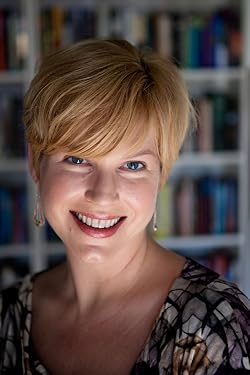
We are pleased to welcome with us today Katie MacAlister, author of many urban fantasy novels, including both the Silver Dragons and the Aisling Grey series, which are two of my favorite funny, light-hearted fantasy romance series.  Her latest novel, Steamed: A Steampunk Romance hits shelves today. Katie will be stopping by throughout the day to respond to comments and questions, and we’ll be giving away two copies of Steamed. So, make sure to thank her for stopping by for a chance to win.

SB Frank: Welcome Katie, let’s start off on the topic of humor in fantasy. Can I ask who are some of your favorite funny fantasy authors or series?

Katie MacAlister: I tend to lean toward books that mix fantasy with other elements, like mystery, romance, etc. Some of my most beloved authors do that with ease — people like Charlaine Harris, Judith Merkle Riley, and a mystery writer who wrote a very humorous series that blended fantasy with wacky characters: William Marshall’s Yellowthread Street series.

SB Frank: Hm… I’ve never read Marshall. I’ll have to add it to my reading list. Out of the scores of novels and stories you’ve written, do you have a personal favorite character or series?

Katie MacAlister: Usually I’m fickle enough that I am most smitten with the characters in the last book I’ve written. However, there are a couple of characters that I have an abiding fondness for, and usually it turns out that those are the characters that I wrote to satisfy myself: Jim the demon dog from the Dragon books, Christian from Sex and the Single Vampire, Jack from Steamed, and Baltic from an upcoming Light Dragon book.

SB Frank: Ah, Jim, the demonic Newfoundland. He steals the show for me, too. What is it that you  like most and least about the act of writing a novel or story?

Katie MacAlister: World building is the best part of writing, hands down. I love creating a new world, working out a mythos that makes sense, and indulging in my (sometimes unbridled) love for research. I will happily research mythology of various cultures for weeks while setting elements into place in my worlds.

The least favorite part of writing is a tossup between plotting an outline, and entering the edits that I’ve made on a hard copy. Honestly, there is nothing more tedious than going through a printed manuscript, and entering all the edits into the Word file. It’s mind-numbingly tedious and usually makes me so sleepy, I have to stop and go do something else.

SB Frank: Wow, I was actually expecting your favorite thing to be creating your trademark wacky characters, though they are often tied up in the world setting and it’s clear you have fun with that, too.  I understand that you got your start as an author by cutting your teeth on a software book. Were you a software expert prior to becoming an author? A technical writer? How did that come about?

Katie MacAlister: Alas, I was experienced in both reviewing and beta testing software, although I wasn’t a writer. One day a publisher asked me to write about my field of knowledge, and giddy with delight, I accepted. Although writing the software books was pretty dull, I am grateful for them because they made me realize that I really did want to write fiction, instead.

The day that the first software book was finished, I swore I was going to write a romantic historical mystery, and that’s exactly what I did. By the time I was done with that, I realized I had absolutely no knowledge about how things worked in the fiction world, and set about educating myself. But I knew I wasn’t going to go back to non-fiction — I just had far too much fun building worlds and tormenting characters to return to that.

SB Frank: Speaking of tormenting characters, Steamed has two main characters, Jack Fletcher and Octavius Pye, who alternate as first-person narrators. Was it fun to write both sides from first person? Is it something you’ve done before? Something you plan to continue? Do you have a contract or release schedule planned for other novels in the series?

Katie MacAlister: When I set about writing Steamed, I knew I wanted to have both narrator’s perspectives in the book, and actually started writing it third person to accommodate that. But it just made both Jack and Octavia too distant, so I switched to dual-first person. I mentioned this to my editor Laura, and she was hesitant about the idea. She felt readers that would be confused about the dual voices, but I knew that Jack and Octavia’s voices were going to be distinct enough that readers would be able to tell right away who was narrating each chapter.

So I toddled off and wrote the book, and waited to hear what Laura thought of the dual POVs. Luckily, she fell as madly in love with Jack as I was, and she actually wanted more scenes from his POV. So I went back and adjusted a few things, added some new Jack bits, and voila! It worked.

We did ask the lovely production team to make some custom elements for the chapter heads so that it was clear before the reader even got to the text who would be narrating a chapter.

I’m really pleased with the results of the dual POVs. I’ve always worked hard to make readers feel like they knew what a hero was thinking in a solo first person book, but there is an inevitable amount of distance that comes from filtering events through one person’s eyes, so this gave me the chance to really bring Jack straight to the reader.

I’ve done one other male first person POV book — “Stag Party” in the Ain’t Myth-Behaving anthology. I loved writing for the hero in that book so much, and his voice was so strong (I had intended to write it from the heroine’s POV, but he just took over), that I wanted to repeat the experience with Jack.

As for whether that will continue in subsequent steampunk books… it’s quite likely. I’m not sure at this point if the next book will be a continuation with Jack and Octavia as main protagonists, or if they will be secondary characters as the storyline continues to unfold, but there will be more steampunk books. In fact, I really need to sit down and write out an outline for one, because that’s going to be the next book I write. Urgh. Plotting!

SB Frank: There always seems to be a dearth of romantic comedies starring zombies, but in the recently released My Zombie Valentine, you manage to fill the void admirably. I especially love when the man-eating head goes home with the precocious… heh heh …anyway… Oh, yes, is this a continuation of a character from previous short fiction? A story you plan to continue either in short fiction or in a future novel?

Katie MacAlister: Bring Out Your Dead was originally published in the Just One Sip anthology, published some years ago. I wrote it because readers were clamoring for the villain in a couple of my vampire books to have his own book, but he really wasn’t cooperating so far as a story was going. I really had intended to match him up with a secondary character in Sex and the Single Vampire, but she absolutely refused to let me do that. So I found someone else for Sebastian, incorporated some characters from previous books, and hoped that would satisfy the readers who wanted his story.

Unfortunately, when Just One Sip came out, I got letters telling me they wanted more Sebastian, so I keep bringing him back in secondary roles, just to satisfy them.

As for the revenants… I get requests for them to make a reappearance as well. I’m not sure that’s wise, given that I’ve just written a story that will launch a new series featuring liches and necromancers, and everyone knows zombies and liches don’t get along.

SB Frank: I know I always try to keep mine separated.  Honestly, I never even realized that Sebastian was the same character until you said that, though it’s obvious in hindsight.  Now, I have to go back and reread the story.  My Zombie Valentine. Well worth reading. Thanks so much Katie for stopping by today and throughout the day to respond to comments and questions as well as for donating two copies of today’s released fun-filled steampunk adventure (that I enjoyed reading very much): Steamed, for two lucky commenters to this post.

By Stephen (SB) Frank

Please welcome today, Caitlin Kittredge. Caitlin is the  author of two popular urban fantasy series: BLACK LONDON and NOCTURNE CITY and the co-author with Jackie Kessler of the ICARUS PROJECT. She will be stopping by throughout the day to respond to fan questions and comments and to give away a copy of Street Magic and Demon Bound. So, please make sure to thank her for stopping by and let her know which novel you prefer to receive.

SB Frank: Caitlin, you are a self-confessed rocker, but I note on your website at www.caitlinkittredge.com that you also play the violin. When did you start playing? How often you play now? And with whom? And what type of music, groups, concerts, you enjoy? [I’m pausing a moment here to picture you playing in a blue-grass band and wearing a shaggy gray beard].

Caitlin Kittredge: I actually haven’t played since college, but I was a classical violinist for ten years before that and I also played Irish folk music. The folk music was way more fun – I played at a lot of dances, in folk bands, all that. Unfortunately, I fell out of playing before the resurgence of folk-punk, or I would have been all over that.

SB Frank: What are your favorite rock groups and bands? What would we find on your iPod?

Caitlin Kittredge: I have a lot of single-artist playlists since I tend to get in a groove, and I also make playlists for my novels and characters for a “mood” when I’m writing. Off the top of my head, the stuff I put in heavy rotation includes the Pogues, Dropkick Murphys, early Bowie, Nick Cave, Lazy Cowgirls, some Zeppelin, Black Sabbath, the Clash, the Dead Kennedys and, because I am a child of the 90s, Nirvana and Green Day.

SB Frank: Nirvana, huh? Well, your bio does say that you acquire bad habits. Speaking of which, other than Nirvana are there any notable bad habits you’d be willing to share?

Caitlin Kittredge: Procrastination! I am a world champion putter-offer. But I’m trying to collect good habits to balance that out.

Another bad habit is getting into internet slapfights with people who don’t appreciate my musical nostalgia. Big Smile

SB Frank: In addition to your two urban fantasy series, BLACK LONDON and NOCTURNE CITY, I understand that you and Jackie Kessler are coming out with the ICARUS PROJECT, starting with Black-and-White, which your website describes as part of the genre superhero fiction. Can you tell us a little about the project?

Caitlin Kittredge: The ICARUS PROJECT is a set of novels set in a dystopian future, where superheroes keep the peace but are really controlled by a mysterious and far-reaching corporation that may have been responsible for the hero’s very creation. The story follows Jet, a hero who uses shadow to fight crime, and Iridium, a hero-turned-criminal who rebelled against her corporate masters and is trying to set the rest of the heroes free – but both of them have hidden motives and a villain that’s much worse than either of them has started to threaten their lives.

SB Frank: Sounds great. I understand that as a teenager you wrote an epic fantasy: sword, sorcery, elves…  Do you have any plans to reenter the sub-genre, either retelling that story or coming up with something new?

Caitlin Kittredge: I don’t currently have any plans… my tastes have changed, but I’m not a one-genre writer, so who knows where ideas will take me in the future?

SB Frank: As the title suggests, your BLACK LONDON series takes place in the UK. You seem to know a lot about the area including a lot of British slang and curse words. Have you lived in the UK for a long time? Or, if not, how did you pick up on all of this?

Caitlin Kittredge: I’ve never lived in the UK, although I’ve spent a lot of time there as a visitor. My ancestors were English and came from Sussex in the 1660s, so they weren’t terribly helpful. Honestly, I watched a lot of English non-fiction programs (reality shows and the BBC world news and the like) to pick up speech patterns and idioms, and then I turned a few of my Brit friends loose on the manuscript of Street Magic to tell me where and how I’d screwed up. Now I like to think I can fake it pretty well.*

SB Frank: You have a great imagination for dark characters/creatures, and I also notice you refer quite frequently to mythology and legend. I’m wondering how much of this stuff comes straight from your brain and how much comes from research. How do you go about inventing a monster or a world setting?

Caitlin Kittredge: I like to use research as a jumping-off point more than gospel. I tend to find something interesting from folklore (for instance, I used the legend of the Black Dog in Demon Bound, a mythological dog that’s said to follow travelers on dark roads and also take souls to the underworld when their time is up.) I started with the idea of the spectral dog – kind of a scent hound for Death – and ran with my own ideas of how that might work in a modern setting from there.

If you see something really weird and effed up in one of my books, though, chances are it was all my idea because my brain can be a strange place.

Caitlin will be stopping by throughout the day to respond to fan questions and to give away a copy of Street Magic and Demon Bound to two lucky commenters.

Joining us today is renowned artist Chris McGrath. Chris is responsible for some the best cover art in fantasy today. He’s done covers for Jim Butcher, Joe Abercrombie, Brandon Sanderson, David Gemmell, and many more. Seeing his art alone is usually enough to make me buy a book. In honor of Chris’s visit we’ll also be giving away a copy of Justin Gustainis’ Evil Ways (Chris did the cover). So with out further delay….

Justin: Thank you Chris for coming by. I’m really excited to have the chance to talk with you. I see your artwork everywhere and it never ceases to impress. What is the process you go through to create one of your covers? How much of the process is done on the computer? How much is done before getting to the point where you are working on the piece digitally?

Chris: After the publisher commissions me for a cover, I usually get a break down of the story from the art director and editor. They tell me what they are looking for for the cover and from there I begin the sketch phase. Sometimes a manuscript is provided, but that seems to happen less and less these days. The sketch phase is usually the hardest part for me nowadays. After you’ve done 9 years of covers it gets hard to come up with new ideas, especially when you are collaborating with a publisher. Some companies give you more freedom than others and the bigger the title, the less room you have to play a lot of the times.

Sometimes an idea comes to me quickly because the project already has an interesting story concept and setting. Other times I go through tons and tons of sketches before I’m satisfied with something. The media for my sketches is anything from a pen drawing to using my wacom tablet in Photoshop. After the sketch is chosen by the art director I can get going on my final version.

Justin: Is it just Photoshop you use to create the final piece once your sketching is done?

Chris: I just use Photoshop. I basically use it in the same way that I use oil paint. The rules of drawing, tonal value, and color still apply. I tried to learn some 3D stuff a few years ago but it was too time consuming and really boring. For me it’s just easier to use the same process as when I was painting.

Justin: Are you actually a fantasy fan? What have you read recently that you really liked? (Or SciFi, for that matter.)

Chris: I like fantasy. I’m a huge fan of Haruki Murakami. His book Kafka on the Shore is a true work of art to me, and one of the best books I’ve read along with The Wind-Up Bird. Fantasy fans should check him out. Jeffery Ford is also awesome. I really loved The Well Built City and The Portrait of Mrs.Charbuque. Brandon Sanderson is great, too. As far as SciFi goes, Dan Simmons’ Hyperion books are right up there with Dune for me. Jeff Vandermeer’s Veniss Underground was really beautiful. These are just to name a few. My SciFi and fantasy list goes on and on. Oh yeah, the Elric saga was an early favorite of mine.

Justin: Some really good books in your list. On the topic of favorite books, some my personal favorites are the Dresden Files series by Jim Butcher. That’s a series I believe you are familiar with. As a Dresden fan I am required by law to ask this question, which I know is one that you have gotten a lot: What’s up with the hats on Harry Dresden covers, and how much crap do Butcher fans give you over it? I’ve never seen a book signing where Jim doesn’t get asked that question. He always says the publisher has Chris put the hat on Harry.

Chris: The Butcher fans have been very kind to me. They could rip me apart, but for some reason they seem happy with the covers for the most part. They have even come to accept the hat. But I do see a lot of questions on the forum regarding the hat. I try to answer that and the staff questions when I can, but it seems that the older forum members take care of that these days. I’d like to say “Thanks!” to them. It gets tiring. I know how Jim feels. But one last time  Wink yes, the publisher wanted the hat on Harry because it has a more eye-catching and iconic look, even though it was a mistake at first. But it seems to have worked and it does look more mysterious.

Justin: Thank you for answering that one. Big Smile  I’m sure it never gets old and, for what it’s worth, I like the hat. Speaking of cover art direction: I know that most authors don’t get much say in their cover art. In your experience when working with a publisher to do a cover, how involved does the author get?

Chris: Most of the time the author does not have any say in what goes on a cover. Some of the bigger authors have some input and have it in their contract to do so, but most of the time it is up to marketing, the art director, and editor. In the end you want to have an attractive package to make potential buyers stop and pick it up. That’s why a lot of the time there are a lot of liberties taken with the actual story. As long as the cover captures the mood and feeling of the book, the inaccuracies of the details are OK just as long as you don’t go too far off the mark.

Justin: Have there been any particular covers that were extremely difficult for you?

Chris: There are many. KOP and Midwinter to name a couple. The difficulty happens when I’m not totally satisfied with my approved concept, so during the time I’m working on it I try to improve on the idea and that’s when I start going in circles. Also, if I do not have a clear idea and don’t plan properly, I can get myself in trouble. The cover usually ends up taking much longer and stressing me out when this happens.

Justin: There is a ton of bad fantasy art out there, so tell me, aesthetically, what makes you cringe as an artist? And, what gives you a good shiver?

Chris: I’m not one for throwing stones, so maybe I should keep quiet on that one. But I will say that good drawing and painting skills will always attract me. When an artist does something that is tasteful and well-crafted, with a good understanding of what they are trying to achieve, it’s commendable. Class and good taste are everything.

Justin: Nice dodge. I know you have to hate those pictures of furries, the crudely-drawn man-tiger with a six-pack… everybody hates those… Anyway, I want to know a little about you before you became one of the biggest names in cover art. So, before cover art, how did Chris McGrath keep utilities paid? Was Ramen noodles a major staple of your diet? Was there any particular moment or breakthrough in your career where you finally were able to think … “I can do this for a living”?

Chris: Yes. There were many hungry nights after college. I didn’t have my portfolio ready when I graduated, so I spent the next three years developing my portfolio in traditional media (oils). Then around 1998 I was introduced to Photoshop. I was pretty slow at painting and realized I could never make a good living at it because it took 4 to 6 weeks for me to finish one piece. So PS became more attractive to me. I spent some time learning the software on my own — basically applying the same rules of what I new about oil paints and drawing and gathering reference. It all works the same in the end. To pay my bills I gave guitar lessons and worked a couple of days a week at a doctor’s office doing medical drawings. That wasn’t too fun and I felt like it was never going to end.

Finally I finished my digital portfolio and started to show it around in 2001 (from 1998 to 2001 I did a lot of life drawing as well) I got my first job with Ace books (Penguin Putnam) and it was funny that they wanted me to do an oil painting for them instead of a digital piece. The cover’s title was called “The King”. You can find it in the Drawings section of my website. After that I got a commission from Random House for a Babylon 5 cover, so things were looking pretty good at that point, or so it seemed. Then after those two jobs I didn’t get much work. I got maybe 4 jobs my second year, then around 8 my third year. Then in 2004 I got about 16 jobs and in that mix was Dead Beat for the Dresden Files and Nightlife for the Rob Thurman series. Those covers hit the shelves later that year and after that it became a full-time job. I guess I did the right kind of cover at the right time. The urban fantasy market really took off and I was lucky enough to be doing covers for the top authors that were driving the field. So those two covers really solidified my career.

Justin: Any words of wisdom for budding fantasy/SciFi artists?

Chris: The main thing is is not to give up. It’s really tough and very trying at times before you have a full-time career. But if you really feel you have talent to make it, you should hang in there. It really does come down to that. I was very stubborn and figured I couldn’t do anything else, so I was willing to take the heat and starve a bit before it all worked out.

Justin: I know you’re a busy man, so I won’t keep you further. Thanks again, Chris, for stopping to chat with us, it was an honor to have an artist of your caliber visit us here. If fans want to check out more of Chris’s work, or purchase prints, please head over to his website at www.christianmcgrath.com. And if you want to win a copy of Justin Gustainis’ Evil Ways, leave us a comment.

By Stephen (SB) Frank

We have with us today, Karen Chance, author of two extremely enjoyable fantasy series that I count among my personal favorites.: the Cassandra Palmer and Dorina Basarab series. Karen has graciously agreed to stop by throughout the day to answer fan questions, and we’re giving away two more copies of Midnight’s Daughter the prequel to today’s newly released Death’s Mistress, so please make sure to comment or ask questions. 

On her website,  www.karenchance.com,  you can read some of her short stories and learn all sorts of gossipy things about Karen, including her penchant for giving advice about relationships with vampires. Loyal readers may recall that just before Christmas, I posed some open questions to Karen on behalf of a, um, friend who suspects that my, err,  that is, his wife has a side relationship with Santa Claus, who is almost certainly a vampire. See discussion here.  We start our interview on that topic:

SB Frank: First, can you confirm or deny that Santa Claus is indeed vampiric?

Karen Chance: Right, and be put on the naughty list for good? I’m already there far too often as it is.

SB Frank: Hm, good point. What does your husband or signficant other, if any, have to say about all these vampire relationships you apparently have? Are there some vampires who he’s happy to see come around? Some vampires (eg: Santa Claus, as a random example) with whom he forbids you to relate at all?

Karen Chance: I don’t have a husband. And if I did, he wouldn’t forbid me to do anything, or the walking undead would be the least of his problems.

SB Frank: My wife said something very similar to me recently, but in regards to remembering to do something or other, I forget exactly… What do you say to suspicions that some husbands have that vampires might be repeatedly mind wiping them every December? Is this an actual vampire ability? And are there long-term effects of repeated mind wipage? For instance, I notice that my friend frequently forgets where he puts things, and I (and he) are quite convinced this these memory lapses are ultimately somehow the fault of vampires. (Not that we’re bitter or anything).

Karen Chance: Frequent mind wipes are certainly a vampiric ability. Forgetfulness is not usually a side effect, though. Paranoia, on the other hand…

SB Frank: And what advice do you have for spouses (such as my friend) who suspect that their spouses may be having a side relationship with a vampire?

Karen Chance: Ask them for investment advice. Seriously, those suckers have hella stock portfolios.

SB Frank: Well with the relationship advice out of the way, let’s turn to fantasy fiction. I recently had a chance to read an advance copy of Death’s Mistress, which is probably my favorite UF novel of the year. The mystery has a stunning ending. There is suspense throughout. The characters are original and fun. My only beef was I had to keep setting the book down because I was laughing too hard during the funny scenes to keep going…Like the part where headless Ray somehow ends up driving and knocks his own head under the car (long laughter pause)*wipes tears from eyes* heh heh. Anyway, I am praying that somebody picks up the option to make this series into a blockbuster movie. So, first question. Where do you come up with this stuff?

Karen Chance: Mostly it’s about the needs of the plot. All of my books have a mystery component. And when writing mysteries, it’s considered bad form (as in, the readers will kill you) if you don’t leave adequate clues along the way. But making these clues too obvious risks ruining the book for people who like to be surprised. So I use misdirection to keep anyone from noticing the more blatant clues being laid. Or, at least, that’s what I tell people. It’s also fun to do something outrageous now and then just for the hell of it.

SB Frank: What does a typical day look like when you’re writing?

Karen Chance: Typical night, actually, since I’m barely conscious in daylight and certainly not creative at all before the sun goes down. Anyway, I never know how to answer these types of questions. The truth–I sit at a computer and make up lies–tends to put people off. It shatters the mystery somehow. I suppose I need to make up a good story about making up my stories, but I haven’t yet. Probably that whole laziness thing coming into play again.

SB Frank:  Has anybody started talking with you about movie rights yet?

Karen Chance: Ha ha ha, no. I don’t think too many people have even heard about the series, and I’m absolutely sure that Hollywood remains blissfully unaware.

SB Frank I understand (again, from your excellent website www.karenchance.com) that you lived and taught in Hong Kong. Did you enjoy living there? Any adventures to share or things that affected your writing?

Karen Chance: I liked a lot of the people I met in Hong Kong, but the city itself wasn’t really my thing. It’s huge, with something like 13 million people, and I’m more of a country girl at heart. I have to admit to feeling a little claustrophobic at times. I was also going thorough serious Tex Mex withdrawal, as it’s not a cuisine HK has chosen to embrace yet. As for adventures, there was that time a bunch of us were caught down by the docks with the diamonds and the four hundred crates of bootleg Ortega, but then, I’m not really allowed to talk about that.

SB Frank:  I lived in Tokyo myself for many years, and so I totally get where you’re coming from with the whole bootleg Ortega thing.  I hear you have an advanced degree in History. Does that help you when Cassandra travels back in time? Or put differently, do you find yourself researching things you want to write about or writing about things you know from research?

Karen Chance: A little of both, I suppose. Anyone who suffers through a graduate degree has mountains of old notes lying around getting moldy, so it’s nice whenever I can find a way to utilize them for something. But it’s also great to be able to research a subject just because it’s interesting, something I rarely had the opportunity to do in university.

SB Frank: Yes, my own dissertation was on the that famously scintillating topic: the retirement practices of Japanese bureaucrats. If you’re running out of moldy notes… No? Well, then, next question… Death’s Mistress (which releases today!!) is the second novel in the adventures of Dorina Basarab. Many characters repeat between the two series. But what I’m wondering is if you ever envision a novel-length adventure between the two protagonists.

Karen Chance: I’d like to answer your question, because it’s one that comes up pretty frequently. I also get asked when I’m going to do a full-length novel with Lia, the part werewolf character from my short stories, or Claire, one of the secondary characters in the Midnight Daughter series of novels. But I have to tell you the same thing I tell everyone else: despite the common perception, authors decide exactly squat all about which books get published, when they are published and in what format. I get a little input on cover art and back cover copy (although I’m not allowed to write it) and occasionally marketing decides to use one of my titles. But that’s about it. So the only thing I can say about your question is that I do plan for the two to meet eventually, but I can’t promise anything about the format.

SB Frank: You’ve had a fair number of short stories coming out in anthologies recently. Do you prefer writing short stories to novels? In your mind, what is the biggest difference to approaching a story versus a novel?

Karen Chance: I find short stories to be the hardest type of thing to write. In one tiny story, I have to fit all the aspects of a novel: plot, characterization, dialogue, world building, etc. I probably spend four times as long doing a short as I do writing a comparable number of pages in a novel, and I’m paid far less for it. I think my paycheck for the first short I ever did was something like $200, and it took me over two weeks to write. But the hope is always that someone will like what they read and go check out the novels.

I suppose the main difference in my short stories and my novels is that the shorts have a single plotline and fewer characters. There’s no other choice, considering the length. This makes them a little more straightforward than the books, without as many layers. Also, unlike the novels, they aren’t really building on a large meta story, and don’t have to carry that burden.

The strange thing is, I always really like my shorts when they’re finished and tend to be absurdly proud of them. Maybe because of the huge amount of effort that went into them. So, I suppose the answer to your question is, I like short stories fine—except when I’m writing one!

SB Frank:  Remember, Death’s Mistress, the second book in the Dorina Basarab series releases today. And it was the most entertaining fantasy novel I read in all of 2009. If you are remotely interested in funny, thrilling, fantasy adventures that weave epic and contemporary elements into action-packed stories, then I highly recommend you buy it now!!  Karen will be stopping by today to respond to comments and questions and we’ll be giving away two copies of book one in the series: Midnight’s Daughter, with winners announced on Thursday.

We’re pleased today to have a guest blog by up-and-coming fantasy author Rinda Elliott.  I ran across Rinda on Twitter and read some of the samples of her work (which you will find links to at the bottom of the blog post) and  really thought she had a compelling, funny story, with great characters.  Check it out by clicking at the link at the bottom of the post.

Rinda Elliott: I’m honored to be a guest here at Fantasy Literature. Thank you for the invitation!

Since I don’t (yet) have books of my own on the shelves, I’m going to instead give away a copy of my critique partner, Rachel Vincent’s, new book in her young adult series about bean sidhes! (Releases this week!) Just comment here and I’ll let the trusty RNG choose.

When I asked Stephen Frank what a “still on submission” UF writer had to offer readers here, he asked me to share the story of my journey to this point. It’s a LONG and BUMPY one. But hopefully, interesting.

I started in romance and submitted books on my own without an agent for years. Hit a few speed bumps, but got close several times. I even had one editor request rewrites on two books. It had taken several years of back and forth submissions with her to get to that point, so when she left the publisher before I got those rewrites back to her, I felt like I’d hit a pretty big roadblock.

During those submission years, most of the speed bumps were comments about my heroines being too strong. I wrote strong male protagonists, too, but they were smart enough to know when to stay back. I got notes about that ruining the romantic fantasy and also about my work being too, um… dark.

I grew discouraged and took a break. I still wrote, but mostly short fiction. I published stories in confession magazines for a time and I continued to enter writing contests — racked up a bunch of first and second place awards. I lived off the success of those contests. Then, after one horror story did particularly well, I bit the bullet and submitted it. It was an odd one — I call it my homage to the heavy on narration Lovecraft and Poe — but it was acquired by the very first magazine.book review Kim Harrison Rachel Morgan 1. Dead Witch Walking 2. The Good, the Bad, and the Undead 3. Every Which Way But Dead 4. A Fistful of Charms 5. For a Few Demons More 6. The Outlaw Demon Wails Where Demons Dare

I took this as a sign that maybe I should try again.

Around that time, I picked up a book by Kim Harrison called Dead Witch Walking and a whole new world opened up to me. Here was a genre where my strong heroines and dark subjects would fit right in! Ironically, half the romances I’d written had fantasy or paranormal elements. My second completed manuscript featured a shape-shifting hero cursed because of his Viking ancestors.

The publishing bug hit me again. Hard. I already had part of a story written with a kick ass, mythic heroine and a smarmy vampire sprite sidekick. I ditched the sidekick since it was a little too close to Harrison and finished Dweller on the Threshold (DOTT). (Though, the sprite smarmed his way into book two, Blood of an Ancient.)

While working on DOTT, I met Rachel Vincent. She’d given me a crazy topic challenge and loved the result, so we became critique partners. Rachel invited her agent, Miriam Kriss, to speak at a mini conference our local RWA chapter held. The editor who came showed some interest in DOTT so when she returned to New York, Miriam pulled DOTT out of her submission pile and called me the next day. I had another wonderful agent take some interest in DOTT that very same week. After working so long at this, I’ll share that week was the most exciting week ever. I thought that was it. The years would finally pay off, and I’d have a book on the shelves within a year. Both agents were at the top of my list, but I went with Miriam since we’d just met in person and seemed to hit it off.

Here is where the title of this blog post kicks in. Yes, I worked for years to break in on my own, and yes, I took a break. But that desire to see your books on the shelves can be strong. When I took the plunge again, I knew it was for keeps this time around and I’d have to develop thicker skin. My two year anniversary with Miriam is this coming March and she’s still submitting my work — still believes in it. Having her back me up has kept the path well lit for me.

So, while waiting for DOTT to find a home, I wrote some short pieces (Sold one that will be out in an anthology in March, a couple of novellas and another book. In that book, I took my life-long love of Norse mythology and apocalyptic fiction and wrote the first in a young adult trilogy. It’s full of action, fantasy and romance. My faithful agent said I knocked this one out of the park, so I’m doubly hopeful now.

Tenacity, patience and drive. I believe those are the keys to success in this business. Yes, the desire to tell stories has to be there from the beginning, but to make it, you have to be willing to dig in to the next project while the last is out of your hands.

It hasn’t been easy, but I wouldn’t trade my journey. I’ve found a place in the world of fantasy literature and built up an incredible support system of authors and friends through groups like OKRWA & Romance Ink! I’m also a part of a wonderful group of authors called The Deadline Dames. We are nine urban fantasy authors who kick deadline butt and share what it’s like from the trenches. Check us out! And if you’re curious about the books I have on submission, I’ve posted long snippets of both. DOTT’s here, and the two from my young adult, Foretold, are here and here.

Hope you enjoy them and thanks again for inviting me!

SB Frank: Thank you, Rinda. Readers, remember to comment on this post for a chance to win a copy of the just released, My Soul to Save by Rachel Vincent. Vincent’s YA series is on my to-read list because her werecat series is one of my UF favorites. Kelly reports that My Soul to Take, the first book in the series, is “solid.”

by Stephen (SB) Frank

Today we’d like to welcome Nancy Holzner author of the mystery novel Peace, Love, and Murder, and of the urban fantasy novel, Deadtown which is on sale today at bookstores everywhere. Nancy will be hanging around after the interview – or at least checking in throughout the day to respond to your questions.  And we will be giving away a copy of Deadtown to not one but two lucky commenters. If you’re a fantasy fan, you don’t want to miss Deadtown; It’s a fun, fast read.

SB Frank: So, how does one go from being a medievalist with a Ph.D. in English to writing contemporary urban fantasy?

Nancy Holzner: A lot of medieval literature was the contemporary fantasy of its own day, with magic and monsters and dangerous quests where opponents don’t play fair. Even the saints’ lives I studied are full of conflict, danger, and magic (in the form of miracles). There’s nothing like a good virgin martyr legend for some slam-bang, larger-than-life conflict between good and evil.

But I didn’t go into academia thinking that I’d find good source material for my own fiction. I didn’t write fiction at the time, and I expected to become a career academic. (Now, I call myself a “recovering academic.”) But my early career choices were all about stories. Throughout college, grad school, and my teaching years, I always loved reading, thinking about, and discussing literature. It seemed like a natural progression to me to want to start telling stories and not just analyze them. First I tried writing something more literary, but it wasn’t fun. I was in an online writers’ group at the time, and we used to do short writing exercises in response to weekly writing prompts. Someone posted a prompt that gave me an idea for a mystery, and I ran with it. It sounds obvious now, but it was a big revelation to me that it could be fun to write the same kinds of books I read for fun. When I was working on the mystery, I read a lot of urban fantasy—couldn’t get enough of it. So after the mystery was finished, I jumped right into the project that became Deadtown.

SB Frank: Thus far you have two novels in two different genres, but both of these seem like they could turn into successful series. Do you see yourself settling into mystery and contemporary fantasy for a while, or are you more of a genre hopper?

Nancy Holzner: From where I stand right now, I expect to focus on fantasy. Deadtown is the first book in a series. The sequel will be out in about a year, and I’m currently plotting out books three through five. It’s been a blast writing this series — the characters are great company and I enjoy their world — and I want to see where Vicky’s story goes.

SB Frank: I love the teenage zombie sidekick in Deadtown. Was she supposed to play a major role right from the start? And how did you first get the idea?

Nancy Holzner: Tina actually showed up about halfway through the first draft of Deadtown. I was writing that draft knowing that my opening scene didn’t work and that I’d have to rewrite it drastically in revisions. When Tina blasted into the story, I knew right away that she’d be in Chapter 1, causing trouble for Vicky from the very first page. Later in my writing process, Vicky and Tina were having an argument, and Vicky complained about how Tina had messed up a job by following her into a client’s dream. As soon as Vicky said that, I thought, “Why are they talking about this? I need to show what happened!” — and I knew I had my opening scene.

As for where Tina came from, I taught high school for a few years. She’s not based on any particular student, but she could easily be friends with many of the students I’ve known. She combines the energy, interests, and strong emotions of a teenage girl with an outlook that’s all her own. It’s hard for me to say where I got the idea for a character, because it often feels like they’re already lurking somewhere in my psyche, waiting for me to notice them so they can step forward and jump into a story.

SB Frank: You mention on your blog that you have an idea for another fantasy series. Is there anything you can share with us about that?

Nancy Holzner: It’s still percolating, so it’s too early to say much about it. I can say that it’s set in the Catskill Mountains — home of Rip Van Winkle and the Headless Horseman — and involves ghosts and strong magic.

SB Frank: Sounds like my type of novel. In your mystery novel, Peace, Love, & Murder, the protagonist, Bo (short for Rainbow) Forrester, returns home from serving in the military where his parents had lived in a commune. Are there any similarities between Rainbow’s parents and childhood and your own? What was home like for you growing up in Western Massachusetts?

Nancy Holzner: I grew up in a very stable and loving home. My dad was a clinical chemist and my mom was a special needs teacher at an elementary school. I was in the middle of three sisters. When I was in junior high, two foster kids came to live with us — one older than me and one younger, so I was still stuck in the middle. I love the Berkshires, where I grew up. It’s a beautiful, hilly region and in the summer there are tons of festivals — classical music, dance, theater. When I was growing up in a small town of about 6,000 people, I couldn’t wait to leave and head for the big city (Boston was my first stop), but now my home town is one of my favorite places.

So my upbringing was very different from Bo’s. I did a lot of research into communes of the late ’60s and early-to-mid ’70s to get a feel for what his childhood would have been like. There were communes around Ithaca, NY, where I live now and those are the loose inspiration for Bo’s home town of Rhodes.

SB Frank: While we’re on the subject of your personal upbringing, in Deadtown, women shapeshifters must give up their powers when they have children. Have you felt personal tension between mothering and a career, or was this inspired by more general societal trends and pressures, or something else?

Nancy Holzner: That’s an interesting question. I met my first husband while I was studying abroad in London, and he and I got married and had our daughter while we were both still in college. She was three when I started grad school. I’ve always assumed that I’d combine motherhood with a career, and I approached parenting and building a career from that perspective. It wasn’t easy, but it was a challenge I accepted right from the start and simply dealt with from one day to the next. (It wasn’t easy for my husband, either, who was an engaged father and worked to support the family while I was earning my Ph.D.)

The limitations on shapeshifting among the Cerddorion stem from the mythology that serves as background to my story. One of the legends of the medieval Welsh Mabinogi tells the story of Gwion Bach, a shepherd boy who gained shapeshifting ability after drinking a potion brewed by the witch/goddess Ceridwen. She chases him, both of them changing their shapes, until she finally catches and eats him. Later, she gives birth to him anew. And after that, there’s no more mention of shapeshifting. My interpretation of this legend led to the shapeshifting restrictions in Deadtown’s world: Among the Cerddorion, the descendants of Ceridwen, only females can shift (since Gwion stole his shapeshifting ability from Ceridwen’s potion), and that ability manifests at puberty and disappears at the birth of a child.

I guess that the limitations on shapeshifting do reflect the difficulty of simultaneously raising children and having a career, but this wasn’t something I set out to write about. In Deadtown, Vicky comes to understand her role as a demon slayer as less of a career choice and more of a calling, a duty, that’s central to who she is. She accepts the sacrifice that comes with that calling. The fact that she accepts it doesn’t mean she’s free of conflict, though. She adores her niece and nephews, and she knows that someday, due to werewolf culture, Kane will want children. But I see Vicky’s conflict as one that’s broader than the gender-specific one of career vs. motherhood. I hope it will resonate with anyone who’s had to make difficult choices.

From Kat: That cover art is AWESOME! Did you have any input into the design?

NH: It’s gorgeous, isn’t it? Before the artist set to work, I had a couple of conversations with my editor how we pictured Vicky and scenes from the book that might inspire the cover. But that was it. When the cover was done, the editor sent me an email with the subject line, “Prepare to be WOWed!!!” and the cover art attached. “Wowed” doesn’t even begin to describe my reaction. I think I screamed; I know for sure that my husband (we both work at home) called out from his office to ask what was going on. I had to wait a few weeks until the cover was finalized before I could share it. That was hard! The cover artist, by the way, is the very talented Don Sipley.

From Lin George: I love the thought of old legends recreated for modern times. Was it difficult to work in the modern technology?

NH: The medieval Welsh tales of the Mabinogi inspired the background mythology for Deadtown, but it’s very much a contemporary fantasy. The medieval background comes into play more directly in the sequel than it does in the first book.

From Tia: I always like to ask debuts authors about their publishing story. Did you have to go through the whole agent query thing or did you take a more unusual route to publishing, such as contest wins, or getting noticed in a workshop? Let us know and inspire us!

NH: I became a nonfiction author — I write how-to and reference books — before I tried to publish a novel. I had an agent to represent my nonfiction, but she doesn’t handle fiction at all. So when I had a novel to sell (my mystery Peace, Love, and Murder) I had to start from square one and search for an agent who’d be interested in taking it on. That took several months, and when I found a fiction agent it took her about a year to sell the mystery to a small press. I still have two agents: one for nonfiction and one for fiction (and yes, they know about each other J).

The path I took to getting Deadtown published was a detour from the traditional route, though. I’d written the manuscript but hadn’t yet shown it to my agent. One day I was looking around the Ace/Roc website and saw that they accept direct submissions from authors. On a whim, I typed up a query and submitted it, along with the manuscript’s first ten pages, per the submission guidelines. I can’t tell you why I did this instead of going through my agent — I’m not usually impulsive like that. Maybe it was because I’d written this urban fantasy when I was “supposed to be” working on a sequel to the mystery. At any rate, when I received a two-book offer nearly six months later, my agent stepped in to help with negotiations. She’s a pro, and I do wish I’d involved her from the start. But at least I get to say that I made it through the slush pile. J

From Bill Capossere: Urban Fantasy is clearly such an omnipresent force now. How aware of what was already out there were you as you wrote Deadtown? Did it affect your writing at all, as in specific attempts to distinguish Deadtown from similar works or times where you thought what you had was edging too close to what had been done before? Similar, say, to epic fantasy writers who have all these stock tropes looking over their shoulders (the horse clan, the snarky thief, the gruff dwarf, the small band of thrown together questers, etc.). How do you keep things “fresh” and in marketing terms how do you convey that freshness to readers perhaps overwhelmed by the quantity of choices?

NH: I started writing Deadtown a little over three years ago, so the urban fantasy landscape looked somewhat different at that time. It was growing, for sure, but hadn’t yet exploded into the ubiquity you note. Back when I was writing the story, I was trying to touch upon some of the conventions of urban fantasy and do my own thing at the same time. For example, in Vicky’s roommate Juliet I play with the “sexy vampire” convention—not satirizing it, exactly, but having some fun with that trope. And my zombies aren’t like the zombies you find in most urban fantasy or horror fiction. For my main character, I knew I wanted a character other than a vampire or a werewolf, and when I remembered the Mabinogi’s shapeshifting story, it clicked. As I wrote, I wasn’t concerned so much about positioning my story in relation to others already out there as I was with following the story that was unfolding.

From RK Charron: Did your work as an editor help when rewriting your writing before sending it out and in anticipating the editor’s editing requests? Also, what is your “The Call” story?

NH: Working as an editor has definitely helped me to become more flexible about being edited. Sometimes. Grin So far, the editorial process for fiction has been a lot gentler than the edits I go through when I’m writing nonfiction. For a technical how-to book, for example, the author review stage means that I have to review and fix chapters that have been marked up by the developmental editor, the copyeditor, and up to three technical editors. All those people are trying to “catch” problems and potential issues, and while I understand the goal is to produce a better book, it can be tough to plow through all the queries, changes, and revision requests. In contrast, for the novels I’ve written so far, even a lengthy editorial letter feels so much more civilized. I feel like I should be sipping tea from a porcelain cup and nibbling cucumber sandwiches as I read it.

Here’s my story about “The Call”: As I said in my answer to Tia’s question above, I submitted Deadtown’s manuscript directly through the publisher’s website. Almost immediately after I did so, my life was taken over by a nonfiction project — it was a big book, and my coauthor suddenly dropped out but the schedule couldn’t change. So for a couple of months I did nothing but work on that nonfiction project and sleep. I had no time to obsess about the fate of the Deadtown manuscript, although of course I wondered from time to time.

I finished the big project, and I still hadn’t heard anything back from Ace/Roc. Around the five-month mark after I’d sent in the query, I figured they weren’t interested. I was trying to decide whether to ’fess up to my agent that I’d submitted a query myself or just focus on a new novel when I got an email from Ace/Roc asking for the next 50 pages. I sent those, and the same day they requested the rest of the manuscript.

The next two weeks were hard. On the one hand, I was checking my email a zillion times each day. On the other, I knew that silence might mean that the manuscript was making its way through the acquisition process. I tried to keep a “no news is good news” mindset — every day that went by without a rejection was a good day. When The Call came, my husband answered the phone, asked who was calling, and told me the caller’s name, which of course I recognized. I quickly learned how to carry on a rational conversation, jump up and down, keep my voice reasonably steady, and make frantic hand signals to my husband, all at the same time. I was thrilled that she wanted to make an offer, but when she said “two books,” I nearly keeled over. Champagne flowed that night.

Stefan: Do you have any rituals or habits when you sit down to write? Anything you absolutely need, or absolutely can not tolerate?

NH: No specific rituals. I prefer to be in quiet surroundings, although I can usually tolerate some noise if I have to. I like my writing atmosphere to be conducive to concentration — good lighting, quiet, and a comfortable chair are pretty much all I need. Because I write for my day job too, I’m usually pretty good at sitting down and getting started. As long as I don’t get sucked into Internet-based distractions. Grin

Stacey Stew: How long did it take you to write this book? Will it have a sequel? Do you like the Resident Evil movies?

NH: It took about three months to write the first draft. I was fortunate because my schedule allowed me to write full-time during those months. The second draft took maybe twice that long — if I’d been working on it full-time, that is, but I was back to squeezing in writing time on evenings and weekends. And it took maybe two weeks’ worth of polishing the final draft before I felt it was ready to send out.

I’m kind of embarrassed to admit it, but I’ve never seen any of the Resident Evil movies. Cool video games, though.

Justin: I’ve noticed that a lot authors put a little piece of themselves into their main character (especially new authors). Did you do this with Victory Vaughn? If so how much of yourself did you put into the character? If not then was there any real world inspiration when creating Vicky?

NH: I think Vicky is very different from me. Some of her emotional reactions have their roots in my own experiences, but she’s the kind of person who charges in and acts, whereas I’m more likely to sit back and think things through (read: waffle Grin ). When I have a story idea that clicks, it feels like the characters step forward from wherever they’ve been lurking in the shadows of my subconscious, like they already exist and now it’s my job to get to know them. In other words, I don’t feel like I build my characters so much as I discover them.

Van Pham: How did you come up with the idea for this novel? Who inspired you to write?

NH: The idea came from several different sources: medieval literature, a desire to use Boston as a setting, and a passing comment I came across on an agent’s blog about dislike for characters who “wrestle with their own personal demons” and wondering who besides you could (or would want to) wrestle with your personal demons. That made me go, “Hmmm . . .” Grin

Raspberry: Where are you at in that picture of you?

NH: That photo was taken in a park on the shore of Cayuga Lake in the Finger Lakes region of central New York state. (And there’s a great waterfall just up the road from it, too.)

Abou Monkey: How would you categorize Deadtown?

NH: I think Deadtown falls squarely into the urban fantasy category. It’s got a lot of action, some humor, and just a hint of romance. I worked pretty hard to build a credible and vivid alternative version of Boston.

John L.: Which authors would you say influenced you the most?

NH: That’s one of the hardest questions for me to answer, because I spent many years studying literature. I believe that people who read a lot soak up a lot of influence through sheer osmosis. So there’s about a thousand years’ worth of literary influences floating around in my head. But that’s avoiding your question. Grin Mystery author Donald E. Westlake is an influence—I love his Dortmunder series. In urban fantasy, the authors who made me want write in the genre were Kim Harrison, Patricia Briggs, and Laurell K. Hamilton (some of her early books). Other urban fantasy writers I admire include Ilona Andrews, Devon Monk, and Faith Hunter (who writes a mean shapeshifter story).

Melissa My World: With growing up with books in hand, did you always want to be a writer of novels? Or did writing just start out as a fun pass time for you?

NH: From the time I was young until maybe halfway through college, I wanted to write poetry. I loved reading poetry and enjoyed writing it. Then I decided to pursue an academic career, and I stopped writing creatively. I focused on analyzing literature, learning about literary history, and writing academic papers. That’s fun as far as it goes, but writing about other people’s stories doesn’t come anywhere near the satisfaction of creating your own.

Kelly: I always want to know…what was the last really great book you read?

NH: In urban fantasy, I found On the Edge by Ilona Andrews both engaging and different. For quirky mainstream/literary, Nancy Mauro’s New World Monkeys is a lot of fun.

SB Frank: Thanks for visiting with us, Nancy! Readers, comment below for a chance to win a copy of Deadtown!

by Stephen (SB) Frank.

Dear Karen Chance: Thank you for agreeing to do an author interview at fantasy literature.com on January 5th. Normally, I start an interview asking about an author’s childhood, work habits and hobbies and the like. But during my research, I noticed that someone has written the most extraordinarily frank and well researched answers to these questions on your website at www.karenchance.com For instance,
• Place you grew up? The land of make believe
• Work habits: Astonishingly lazy
• Morals: Prone to relationships with vampires (note: this may be more implied than stated)
• Hobbies: giving relationship advice to women. You even have a section about why relationships with vampires are so great (written from a female’s perspective, I might add). It is this last point I wish to blog about today by way of an open question for you to answer during your interview at fantasyliterature.com on January 5th.

The situation: In recent years, a, um, friend of mine has begun to suspect that my wife that is to say, his wife, a) has an ongoing relationship with a vampire; and b) that the vampire is Santa Claus. And before you scoff at this like everyone else, let me, present my friend’s evidence, which I think every rational person will agree is quite compelling.

  1. Santa Claus appears to be immortal.
  2. He only shows up at night and in a very sly and sneaky way.
  3. He has supernatural quickness and the apparent ability to mind wipe … my friend after every visit.
  4. He dresses in the color of blood, which is obviously in case of splatters.
  5. Just before he comes to town, my friend’s wife starts acting strangely: singing songs about joy, happiness and love, bringing live trees into the house, and eating lots of chocolate…
  6. Most damningly, every year, Santa Claus gives lingerie to my friend as a present but invariably when he tries it on, he discovers that it is not even in his size but his wife’s! And then instead of taking it back to the store for an exchange (as would be the obvious next step), his wife insists on keeping it as a memento of Santa’s visit. And then she starts slinking around in it when least expected in a very distracting way. And so as you can see, my friend’s fears about Santa Claus are well founded indeed!

My first question for you – entirely on my friend’s behalf – is: can you confirm or deny that Santa Claus is indeed vampiric?

Second: If you have a committed boyfriend or husband, is your significant other an actual vampire? And, if not, is he as insanely jealous as, um, my friend? And are there some vampires who he’s happy to see come around? Or are there some vampires (say, Santa Claus, as a random example) with whom he forbids you to relate at all?

Third, What do you say to the suspicions entertained by some (certifiably non-paranoid) husbands that vampires might be repeatedly mind wiping them every December? Is this an actual vampire ability? And are there long-term effects of repeated mind wipage? For instance, I notice that my friend frequently forgets where he puts things, and I (and he) are quite convinced this is ultimately somehow the fault of vampires. (Not that we’re bitter or anything).

And fourth, what advice do you (or your husband) have for spouses (such as my friend) who suspect that their spouses may be having a side relationship with a vampire?

Stay tuned for the answers to these and other weighty questions when we post her interview on January 5th. Karen will be stopping by throughout the day on the 5th to chat and answer questions; so please hold your questions for her until then. Meanwhile, for today’s discussion, I’d like to hear from you: Is Santa Claus an actual vampire? Yes/no? Evidence? And what about other famous public figures? Have you never wondered whether certain pasty-faced politicians are literal as well as figurative bloodsuckers?  Tell us your thoughts for a chance to win another copy of Karen Chance’s Midnight’s Daughter (click here for Kelly’s excellent review). By the way, I just had the chance to read her forthcoming sequel: Death’s Mistress (in stores on 1/5) and am pleased to report that it was the most entertaining UF novel I read during all of 2009. And that’s a lot of books! I actually had to stop reading several times for laughter breaks during the funny scenes.

by Stephen (SB) Frank.

This morning I’d like to talk about author interviews and garage bands. Authors first, beginning with a reminder that Nancy Holzner will be stopping by later in December. Then, in January, we have visits from authors Karen Chance and Caitlin Kittredge. Kittredge, today’s topical victim, is is the best-selling author of two urban fantasy series: Black London and Nocturne City. In chatting with her about her upcoming visit, I’ve learned that Kittredge rocks and plays the violin. In fact, I have discovered that her musical appreciation is so vast that she even enjoys the stylings of that infamous Seattle garage band, yes, you guessed it, Nirvana. Yet while I am soooooorely tempted to throw stones, I suspect that I myself might live in a bit of a glass house, having practically memorized my mother’s double album of Barry Manilow’s Greatest Hits in my own misspent youth.

On the day of the interview we’ll be giving away copies of Kittredge’s highly creative Street Magic and Demon Bound. But first we have a final copy of Meding’s debut: Three Days to Dead to giveaway and, by the way – I haven’t talked about it much, but I’ve been enjoying this fantasy thriller over the last several days. It comes at you fast and never lets up.

Enter in one of two ways (or both):

1. Tell us: what questions do you have for Kittredge for her upcoming interview? Or

2. Tell us: what mockable music did you (or do you) listen to that may not be entirely mainstream, hip, or you know, possessing of any degree of musicality? For those seeking inspiration, Kittredge’s website can be found here.

We have with us today Mike Resnick. Mike  is one of the most acclaimed speculative fiction writers of all time and the author of hundreds of novels and short stories, mostMike Resnick FB picture of which fall into the category of science fiction or fantasy (at least since the seventies).  He is also the editor of Jim Baen’s Universe and is famous for being a fan and conference goer. We are honored to welcome today this living Science Fiction/Fantasy Legend.

SB Frank: Thank you Mike for joining us. With 33 Hugo nominations, and 5 awarded Hugos, you are generally considered the most decorated writer of short speculative fiction. In your opinion, what is the key to a successful short story?

Mike Resnick: If you just count Hugos, Connie Willis and a couple of others are ahead of me. The Locus list, which you are quoting, counts not just Hugos but all major awards from all over the world.

In answer to your question, I think when all is said and done, a story must make an emotional impact on the reader. It must move him – to laughter, to tears, to fear, to sympathy, to anger, to something. If it makes him think, so much the better, and the author has written a better story for it – but if it doesn’t make him feel, then it fails as a story, even as it may succeed as a polemic or a technological crossword puzzle in prose form.

SB Frank: While it’s out there being evocative, your writing is also very cerebral – smart humor or smart fiction. You explore a variety of deep themes and make people think. In particular, you often write about Africa and the problems caused by colonialism. What do you see as the biggest current challenges facing that continent? And is there an attitude or misconception toward colonialism that you would you most like to change through your writing?

Mike Resnick: The biggest problem right now is a continent-wide corruption on a scale unimaginable to those who haven’t been there (and no, tourists have not been to the real Africa). Robert Ruark wrote an international bestselling novel about the Mau Mau back in the 1950s titled Something of Value. The meaning of the title is that if you are going to take away a people’s culture, you had better replace it with something of value or you’ve got a big problem on your hands. Fifty years after Ruark, we still haven’t replaced it with anything of value to Africans, and we have 40+ separate and distinct big sub-Saharan problems on our hands.

SB Frank: You have said that your Lucifer Jones novels are particular favorites of yours. Is this true, and if so, is there a specific reason?

Mike Resnick: I prefer writing humor to anything else, though of course my reputation is based on my serious work. And of all the humor I’ve written, which comes to maybe a dozen books and 90 or more stories in this field, what I most enjoy writing are the Lucifer Jones stories. They’re parodies of every bad B-movie I saw and every trite pulp magazine I read when I was growing up, and the language is a delightful cross between the purple prose of Trader Horn and the fractured English of Pogo Possum. Some of the story and chapter titles will give you a broad hint: “The Island of Annoyed Souls,” “The Clubfoot of Notre Dame,” “A Jaguar Never Changes Its Stripes,” “The Best Little Tabernacle in Nairobi,” and so on. They’re just a pure delight to write.

SB Frank: You are the executive editor of Jim Baen’s Universe, which is closing as of April 2010. The closing has been handled masterfully, but it still seems a sad thing for the industry as a whole. Is there anything you’d like to say about that? And, as a corollary, from your perspective, what are the happiest and unhappiest current trends in speculative fiction publishing.

Mike Resnick: Jim Baen’s Universe had a fine business model when Jim conceived it and started it, but that statement was invalid before the magazine was a year old. (I joined it in its second year.) The notion was to pay the major writers a quarter a word, three times the top rate of the digests, and to run a couple of hundred thousand words an issue – and against the competition that existed when the magazine debuted, against Asimov’s, F & SF, and Analog, it made sense to pay those rates, put together that many words, have sparking, moving covers by a top artist like David Mattingly, and charge $30 a year for a basic 6-issue subscription. After all, when you compared values, we were giving the reader more big names and more words than the digests for the same price.

But as it turned out, after we’d been in business for about a year, we were no longer in competition with the digests. We were in competition with Subterranean Magazine (which was running people like John Scalzi, Lucius Shepard, Elizabeth Bear, Joe Lansdale and myself in just about every issue), and Clarkesworld (which ran stories by Tobias S. Buckell, myself in collaboration with Lezli Robyn, and similar), and a dozen other e-zines that were paying pro rates and were free.

How do you compete with that? Suddenly a bunch of e-zines were almost matching our firepower (and in the case of Subterranean, totally matching it) and not charging a penny. Suddenly that $5.00 an issue didn’t look like such a bargain.

We had other problems. Asimov’s came back from a near-death experience thanks to selling a few thousand issues a month via Kindle and Fictionwise/Barnes/the “Nook”. But Baen Books felt that our going to Kindle or Fictionwise would abrogate our distribution agreement with Simon & Schuster, so that was a potential lifeline that was denied us.

Weep us no tears. We announced the ending far enough in advance so that no subscriber would be left with paid-for-but-unreceived issues, no writer would deliver a commissioned story only to be told that the magazine was full and/or couldn’t pay for it, and no serial would be cut off in the middle. We pioneered the way, and when I took a quick count tonight, there are, excluding Jim Baen’s Universe, 18 magazines paying pro rates, and 14 of them are e-zines.

SB Frank: That’s a dramatic industry change and a great help for authors. I know you write primarily in science fiction, but you have some outstanding fantasy titles as well. Do you have any favorite fantasy writers? Any writers of short fantasy fiction for our fans at Fantasy Literature to watch for?

Mike Resnick: I’m no stranger to writing fantasy, or to appreciating it. Among the classics, I most admire T. H. White’s The Once and Future King, which I find far superior to Tolkien or C. S. Lewis. I’m also a fan of Orlando Furioso. I believe that Unknown, with stories as diverse as Sturgeon’s “Yesterday Was Monday,” Williamson’s “Darker Than You Think,” Heinlein’s “Magic, Inc.” and Leiber’s Gray Mouser stories, was far and away the greatest fantasy magazine of all time. I love Lisa Goldstein’s “The Red Magician,” Jonathan Carroll’s “The Land of Laughs,” Arthur Byron Cover’s “Autumn Angels,” and of course you could do a lot worse than Ray Bradbury’s “Dandelion Wine” and “Something Wicked This Way Comes.” Oh, and let’s not forget Jack Vance’s “The Dying Earth.” And while I have no interest in or admiration for paranormal romances, there is nothing wrong with the source: Bram Stoker’s still-brilliant Dracula.

SB Frank: Throughout your career, you have sustained a pace of several novels and I don’t know how many stories, dozens, I’d guess, per year. I am not sure if the inspiration is more impressive than the motivation. But I’d love to know how you get so many fabulous story ideas.

Mike Resnick: I get them from everywhere. One of my favorite sources is movies and plays that missed a better story (my answer to The Elephant Man was Sideshow), movies that should have been better (my answer to Don Juan DeMarco was “A Princess of Earth”), stories where I disagreed with the premise or ending (my answer to my friend Bob Silverberg’s The Second Trip was “Me and My Shadow”), and so on. Many came from my observations during our trips abroad: “The 43 Antarean Dynasties,” “Seven Views of Olduvai Gorge,” some of the Kirinyaga stories, others. Some came from songs: “Distant Replay” came from “When or Where”; “All the Things You Are” even kept the song title; the last third of The Widowmaker paralleled Marty Robbins’ “El Paso”. Some come from reading, some from discussions, and some just pop into my head. I could give you the genesis of all 60 novels and 240 stories – but each would be different.

SB Frank: You’ve said that you have always wanted to write a Western. And while we were chatting about the interview, you mentioned that something was in the works. Can you tell us about it?

Mike Resnick: All my adult life I have been fascinated by Doc Holliday and Johnny Ringo, and I have always wanted to write a novel about them – but as a newcomer to Westerns, I simply couldn’t afford to write it for a newcomer’s advance. Then a couple of months ago Lou Anders, my editor at Pyr, asked me for a “Weird Western,” and I agreed. The Buntline Special will feature Doc Holliday, Wyatt Earp, an Apache medicine man named Geronimo (he really was one), a vampire named Bat Masterson, the thing that used to be Johnny Ringo, and more. Perhaps it’s not the novel I’d planned on writing, but at least I finally get to put Doc and Ringo on paper. Well, phosphors.

SB Frank: What other books, stories or screenplays do you have in the works?

Mike Resnick: Always an awkward question, because the answer changes by the month. Books about to be published or written include Shaka II (November or December from PS in England; it’ll be in Subterranean Magazine next year); Starship: Flagship, the 5th and final Starship book, coming from Pyr in December; The Business of Science Fiction, a collection of the Resnick/Malzberg Dialogues that have been running for the past dozen years in the SFWA Bulletin, from McFarland; The Buntline Special, sometime next year from Pyr;  Blasphemy, an omnibus volume of 2 rather blasphemous novels (The Branch and Walpurgis III) and 5 short stories in which God or Jesus have speaking parts, from Golden Gryphon in summer; Masters of the Galaxy, a collection of my Jake Masters novellas; and Lezli Robyn and I have been asked to outline a YA trilogy for a new publisher and will be doing so in January.

In short fiction, I’ve got “The Bride of Frankenstein” in the December Asimov’s; “The Blimp and Sixpence” in the December Jim Baen’s Universe; “Shame,” a collaboration with Lezli Robyn, in the January Analog; “On Safari” in the upcoming anthology Gateways; a couple of anthology stories (and a trio of assignments) with Lezli Robyn; a novella called “Six Blind Men and an Alien” for Subterranean Magazine; 2 more Harry the Book stories; and a Lucifer Jones story in just about every issue of Subterranean Magazine.

Questions from the Fans:

DeeAnn: How have you utilized your love of dogs (I gather you used to breed collies) and your love of Africa to inform the storylines of your books and short stories?
Mike Resnick: Dogs first. Back in the 1990s I wrote a private eye novel titled Dog in the Manger, about a missing show dog that was just the tip of a very corrupt iceberg. In 2009, I had out a fantasy novel titled Stalking the Dragon, which had to do with a dragon show, and integrated much of how a dog show works. And I’ve used dog shows or their equivalents in a couple of short stories, “Royal Bloodlines” and “A Most Unusual Greyhound”, a pair of funny fantasies about werewolves.

As for Africa, it’s been a major factor in my career, probably the major factor. Kirinyaga consists of 10 sequential episodes; various parts have won 2 Hugos and gotten 8 Hugo nominations, and the book has garnered 66 major and minor awards and nominations (and is still collecting them). Ivory was a Nebula nominee here and a Clarke nominee in England. “Mwalimu in the Squared Circle” was a Hugo nominee; so was “Barnaby in Exile”. “Hunting the Snark” was a Hugo and Nebula nominee. “The 43 Antarean Dynasties” won a Hugo. “Seven Views of Olduvai Gorge” is a Hugo and Nebula winner, and has also won awards in other countries. I did a trio of novels — Paradise, Purgatory, and Inferno – that were science fictional allegorical histories of Kenya, Zimbabwe, and Uganda. I’ve written two major sf/African novellas in the past year: “Kilimanjaro” and “Shaka II”. So as you can see, my career would look a lot different without the Dark Continent.

Anorithe: Is he a trekkie or a Sci/Fi nut himself. I know he writes the stuff, but did he camp out for the new Star Wars films…does he go to Star Trek conferences, is Halloween just a day when EVERYone dresses up instead of just some people…you know.
Mike Resnick: I am not a Trekkie. I didn’t think much of the original series, and since I stopped watching network TV series about 25 or 30 years ago, I haven’t seen any other Trek shows and spinoffs. I thought the first two Star Wars films were good summer fun, nothing more; I didn’t like the third; and the three most recent were all-but-unwatchable. I don’t go to Star Trek conferences. I do go to about eight to ten science fiction conventions a year.

Ashe Argent: Before becoming an author. Mike Resnick was a book salesman, apparently selling steamy novels for men.
Mike Resnick: Nope. I wrote in the adult field under a variety of pseudonyms, and I edited some men’s magazine and tabloids, but I was never a salesman, only a writer and editor.

Anorithe: What are your pseudonyms you used ‘back in the day’? (i.e. 1960s/70s)
Mike Resnick: Sorry. Those – there were over 150 of them – go to my grave with me.

Anonymous: Have you ever been to Africa?
Mike Resnick: Yes. To Tanzania, Zimbabwe, Uganda, Malawi, Botswana, Egypt, and 4 trips to Kenya.

Joe Scanlon: What is the worst book idea you ever had?
Mike Resnick: Whatever it was, I hope to hell I didn’t write it.

SB Frank: Anything else to share? Favorites?
Mike Resnick: My favorite writers in the field: Catherine L. Moore, Bob Sheckley, Alfie Bester, George Alec Effinger, Barry Malzberg, Ray Bradbury, James White, Cliff Simak.
My favorite writers outside the field: Raymond Chandler, Nikos Kazantzakis, Edward Whittemore, Alexander Lake.
My favorite collaborator (I’ve had 43): Lezli Robyn.
My favorite editor: I will answer that only when I quit writing.
My favorite publisher: ditto.
My favorite of my own characters: Lucifer Jones.
My favorite of my own books: The Outpost.

SB Frank: Thank you so much for this interview!

And thanks to all you readers for stopping by. We’d love for you to comment on this post either to respond to something said or just to share your appreciation with Mike.  Mike will see all of your comments.
We’re giving away not one but two novels in connection with this event: A signed copy of Midnight’s Daughter by Karen Chance - the sequel of which, Death’s Mistress, hits the shelves on Jan 05th.

We’re also giving away a copy of the just released Three Days to Dead by Kelly Meding. Feel free to comment even if you don’t wish to enter either contest and check back on Thursday when we’ll close the drawings and announce winners during Ruth’s Thoughtful Thursday post.

nancy_lake_croppedOn December 29th, author Nancy Holzner will be stopping by to chat about her fantasy debut, the much discussed Deadtown.  In preparation for that, we’re soliciting questions you’d like to ask Nancy. Meanwhile, if you’d like to learn more about her or her novels, you should check out her website. There are lots of fun events and games going on there, including previews of her novel. All questions submitted will qualify you for an entry in today’s drawing. We’re giving away a copy of Deadtown.  And while you’re here, comment on Ruth’s Thoughtful Thursday post for a chance to win Raider’s Ransom by Emily Diamand. Both drawings will continue through Monday, December 7th and will close sometime after 5PM, so check back to see if you’ve won and, of course,  to also check out Monday’s fascinating interview with Science Fiction and Fantasy Legend, author Michael Resnick.

By SB Frank.

In the innocence of my youth (note: aka up until a couple of months ago), I naïvely thought that a fantasy in which a supernatural being fell in love was called a “paranormal romance.”  When I started blogging, I proudly proclaimed myself a fan of urban fantasy and paranormal romance and invited people to send me reading materials. Yeah.

I soon got wise to the difference between fantasy and romantic fantasy and things settled down. But then a few weeks ago I received in the mail a hot-off-the-press paperback with a naked man on the cover that I’m 99.8% sure I never asked for. The unsolicited sex object was turned demurely so that his washboard abs rippled but his private bits were unseen, but he was very clearly starkers.   I instantly imagined the following conversations:

Pre-teen Pubescent Daughter: (in a tone of prurient curiosity) Daddy – why are you reading a book with a naked man on the cover?

Teenage Pubescent Son: (in a tone of abject mortification) Dad – why are you reading a book with a naked man on the cover?

Wife: (in a tone I refuse to even speculate upon) Hon, can I, um, borrow that book when you’re finished reading it? Or, you know, just the cover?

So, blame my personal sexual insecurities, but the book hit the trash unopened. I consulted with literary beefcake expert Mandi of Smexybooks who had this to say of the incident: “You tossed it? Poor naked-man cover!”

Yeah. Anyway, it seems clear that we all draw lines in different places.  So for today’s discussion, I thought I’d solicit you all on the topic of fantastic sex and whether (um, in literature only please) you can ever get too much.  Where do you personally draw the line? One commenter will win a copy of Nancy Holzner’s forthcoming Deadtown, which I have reviewed in advance and am happy to say is an excellent novel that I have no beef with. [Due to the Thanksgiving holiday this drawing/contest will remain open for an entire week and there will be no Thoughtful Thursday post. Instead, all comments to all blog articles that post this week, starting today, including book reviews, will qualify you for an entry into the drawing. Happy Thanksgiving. Check back next Monday at the top of the blog to see if you've won].

We have with us today, Lev Grossman, in addition to writing book reviews for Time Magazine, Lev is also the internationally best-selling author of The Magicians, Warp, and Codex. His Nerd World blog has recently relaunched as Techland.com. But Lev promises that a) he is still a nerd; and b) he will still be blogging about nerd culture.

SB Frank: I was looking at your website levgrossman.com, and I saw that you’ve written on some fascinating topics.  One article in particular that caught my eye was a piece “Catalog This,” that talked about the bizarre things that are sometimes bequeathed to libraries as part of the estates of famous personas, such as Dante’s ashes, etc.  If you could pick one bizarre item to bequeath to a library after your death, what would it be and why?

Lev Grossman: When I was working at the Beinecke Library at Yale, I used to take my ease at break time in a shabby old armchair in a part of the stacks that we called The Vault. It was only towards the end of my tenure there that I noticed the label on the chair in The Vault, which explained that it was Robert Louis Stevenson’s writing chair. Which I had defiled with my unworthy buttocks.

I wouldn’t leave my writing chair to a library, because it’s a boring Aeron chair. But I might leave my writing desk, which is this gigantic metal-clad industrial work bench that somebody salvaged from a dead factory in Allentown. Since it’s basically indestructible, it wouldn’t be any trouble to curate. And if nothing else they might get some use out of it.

SB Frank: I know I’ve always wanted an indestructible desk.  So, other than Dante’s ashes, what’s the most interesting thing you’ve written about in your nerd world blog for Time Magazine?

Lev Grossman: According to the WordPress stats, the most objectively interesting thing I ever wrote on my blog is a review of Tolkien’s The Legend of Sigurd and Gudrún. Which I found a little austerely Norse and Wagnerian for my taste.

For me personally it was probably an interview with Parry Gripp, lead singer of Nerf Herder, one of the founding bands of nerd-pop. He’s one of my culture heroes.

SB Frank: Nerf Herder’s excellent, but, no offense,  I’ve got to go with Tolkien. I’d imagine that being a professional book critic gives you a leg up when it comes time to writing your own novels. But does it ever get in the way?

Lev Grossman: It gets in the way all the time. Working at Time is a full time job, so my novel-writing happens in the early mornings, late at night, and in spare moments on weekends. Being a professional critic is an unbelievably great job, so much better than anything I ever thought I could get paid for. But when it comes to writing novels, there is no day job so great that a novelist won’t find a way, in his petty, miserly little heart, to bitterly resent it sometimes.

SB Frank: Well, we’re all grateful that you persevere. Your most recent novel, The Magicians is still on shelves. Any good or exciting news to share?

Lev Grossman: That it’s still on shelves! And it’s selling well, by the standards of a non-famous author anyway. According to IndieBound, it was the #2 bestselling hardcover in fantasy and science fiction for most of this fall, at least in independent booksellers. I am a really happy author these days.

SB Frank: That is happy news. Congratulations! The Magicians has a somewhat rare realism of character, by which I mean that, you allow the protagonist, Quentin, to be a self absorbed and error prone, typical teen. He differs significantly from a Harry Potter type hero whose virtues more than offset his few character flaws. Was this realism something you deliberately set out to accomplish before writing the novel or something that happened along the way?

Lev Grossman: It happened along the way, mostly. Though I don’t think any novelist ever sets out to write an unreal character. I always felt that Harry — much as I love him — was in the end a little too good of a person. I corrected Quentin accordingly. Some might say I over-corrected.

SB Frank: Speaking of Quentin, in book three, of The Magicians, he and his friends encounter Fillory. I understand that you are considering a future novel set in Fillory. Is this true? And would it be a straight sequel or more of a spin off?

[Author looks shifty and mumbles something unintelligible.]

SB Frank: Aha, I see. Well what other irons do you have in the fire? Any other projects or plans you’d like to share?

Lev Grossman: My most exciting, ambitious project at this point is keeping my day job and thereby paying my mortgage. But when I can I’m working full tilt on that sequel-like project I was trying not to discuss in question 6. There have been some conversations with Hollywood people, too. But you never know if those are going to go anywhere.

SB Frank: I’ve noticed that myself about people from Hollywood.  So, may I ask, what are the best books you’ve read in 2009?

Lev Grossman: Age of Wonder, by Richard Holmes, The Financial Lives of the Poets, by Jess Walters, D-Day, by Antony Beevor, Cooking Dirty, by Jason Sheehan, and Catching Fire, by Suzanne Collins

SB Frank: Before we close, I’m hoping you could answer a few questions from the fans:

From Michele: What was your primary or favorite Dungeons & Dragons role/character growing up?

Lev Grossman: I mostly played fighter/thieves. I liked the hardware, and I was always too greedy and impatient to go through the work of leveling up a spellcaster. I went though a bard phase, too. I may have gotten overly attached to that guy. We bent a lot of rules to keep that bard alive.

From Mike: What music would we find in your iPod or CD player?  And what video games, if you game?

Lev Grossman: I’m in a big nerdcore phase right now. I’m working my way through MC Lars at the moment. As for gaming — “if I game.” Please! I just finished Halo: ODST, and now I’m about a quarter through Borderlands. I picked up Batman: Arkham Asylum and Dragon Age: Origins in between, but they didn’t take.

From Shellie: What is the nerdiest thing that you have done in the past 24 hours?

Lev Grossman: On the way to work I was listening to MC Lars and playing Geo-Defense Swarm on my iPhone, while walking down the street. Yeah, I’m that guy.

Very nerdy, Lev. Thanks for the interview and thanks to all of you for stopping by. One commenter on this post will win a copy of Mr. Grossman’s The Magicians.  Comment directly on the interview or on the topic: Why I am a fantasy nerd. Er,  um, that’s why you’re a fantasy nerd. Winner will be announced on Monday!

ann-aguirre-oct-2009We have with us today Ann Aguirre, National bestselling author of Science Fiction and Fantasy who is also the romance novelist, Ava Gray whose Skin Games hits shelves today. Ann has become one of the more popular fantasy and Sci/Fi writers of recent years. And we are very pleased to have her with us today. She has also graciously agreed to stop by and answer our questions today. So, after reading the interview, be sure to answer questions and let her know which of her books you’d like: Doubleblind, Skin Games, or Blue Diablo.

Q1: I was looking at your website and I see that you’ve been a former clown. Can you tell us a little about that?

Worst job ever, particularly seeing as I am mildly afraid of clowns. I would look in the mirror and scare myself. I still have residual trauma. But for the details of it, I worked at gas station grand openings, giving out free hot dogs and balloons to the kids. It’s the antithesis of awesome.

Q2: Later this month, we’re having two self-proclaimed fantasy nerds, Lev Grossman and Jim Butcher, visit. So we’re talking a lot about what it takes to be a “fantasy nerd” this month. Do you have any hobbies besides writing Sci/Fi and Fantasy that you think would qualify you as a fantasy nerd?

I don’t think I am a fantasy nerd. I prefer the term ‘gamer geek’, thank you. I’m not really into epic fantasy, unless it takes place in the confines of a video game. Which is why I’m currently stoked to get my copy of Dragon Age.

Q3: In Doubleblind, the Ithtorian society has a sort of yin yang feel to it: An ambitious, almost brutal at times, mode of social interaction, juxtaposed with a much softer, zen-like approach to architecture and physical environment, and mannerisms like the wa. Why did you choose to make them this way?

That’s how they are. The Ithtorians have a complex civilization with layers and eons of culture and custom.

Q4: The Kiss of Teeth were really unnerving. Dare I ask what inspired these creepies?

Nightmares? A few people have commented that the Morgut remind them of the Magog from Andromeda. I did watch that series for a couple of seasons so it’s possible I drew some inspiration unconsciously from them, but there are key differences in physiology and culture.

Q5: I hear that Hellfire, the sequel to Blue Diablo will hit the shelves on April 6, 2010. Where are you in that process? Does that date look solid? Any updates there for our urban fantasy fans?

Yes, the book is firmly set for April 6, 2010. I just finished copy edits, which means I have only the galley stage to complete before the book is ready to go. I also just turned in Shady Lady, so the first three books have been written at this time. There are some new characters and big surprises in store for my readers.

Q6: And what about Killbox, the next novel in the Sirantha Jax series. Is that still scheduled for October of next year?

There’s some good news about Killbox. It’s been moved up a month for a September 2010 release. So it won’t be quite a full year until the next installment.

Q7: In addition to the two series you write as Ann Aguirre, you also write revved up romance novels under the name, Ava Gray, including Skin Game, which hits stores today. Can you tell some of us who may not be familiar with those romance novels, what they’re about and how they compare to your Fantasy and Sci/Fi series?

The differences between my romances and my SF&F are two-fold: first, the primary focus is always the relationship and the beauty of falling in love, and second, the plot will come in to augment the relationship, not the other way around. Let me give you an example. In romantic science fiction, Jax and March are trying to stop a galactic conspiracy and they fall in love along the way. The romance is secondary to the conspiracy. In a futuristic romance, Jax and March fall in love–and while falling in love, they also prevent an interstellar war. It’s a slight but crucial difference.

My Ava Gray books are hot, dark, gritty and violent. I recommend them to readers of romance who are looking for something different, and for spec fic readers who like a strong romantic thread in their fiction. As to what they’re about, in most general terms, it’s about one person with extraordinary powers finding a mate and falling in love.

Q8: What other fantasy authors do you have on your bookshelf? What fantasy books and authors do you enjoy reading most?

Fantasy authors on my shelf right now include Lois McMaster Bujold, SL Viehl, Maria V. Snyder, Casey Daniels, Marjorie Liu, Eileen Wilks, Kat Richardson, Rachel Caine, Jim Butcher, Patricia Briggs, Robin McKinley, Lori Devoti, Moira J. Moore, Jacqueline Carey, Mario Acevedo, Anya Bast, Kim Harrison, and there are more upstairs. These are just the names of authors I could see on my office shelves.

Q9: From TJ: Do you have in mind how the love triangle from Blue Diablo will end – or are you guessing along with us?

I didn’t know in the beginning. Now I think I do, but I don’t swear it’s right. Things happened in Shady Lady (book 3) that totally blew my mind, but I went with it because it was so obviously right. So just because I think I know the answer right now, it doesn’t mean I won’t change my mind, based on future revelations. This is a big adventure for me, too.

Q10: From Ramona: How many Corine Solomon books do you intend to write (I hope, as many as possible)? And, How is it to live in two parallel universes, one of Science Fiction and the other of Urban Fantasy? What do they have in common/different for you as an author?

Unlike Jax, where I am writing 6 books, no more, Corine has no set end date. As long as the publisher and readers want more, I will happily keep writing them. At this time, I’ve sold three books and those are written. I’d obviously love to do more, but demand will dictate whether or not that is possible. I hope readers will be totally enthralled by book three, making it possible for this to become a long-running series.

For me, it’s wonderful to have two such diverse projects to work on. I would get bored if I was married to one genre and one style. My voice is dictated by my characters, and writing both SF and UF allows me to flex my writing muscles. So that’s fantastic.

Corine and Jax are very different characters; they want different things. So there’s not a lot of overlap, I think. Jax lives for the thrill. Corine wants a place to belong. About the only thing they have in common; they are both survivors.

Q11: From Shellie: Which genre do you prefer to work in? And which of your characters is your favorite, or have you connected with the most?

I love the genre I’m with. *g* And I love all my characters when I’m writing them.

Thanks for having me!

Readers, what additional questions do you have for Ann? Remember, she’ll be stopping by to answer them!

by SB Frank 
So, Tues November 3rd is the day we post our interview with Ann Aguirre. Meanwhile, I’ve been looking at my swollen bookshelves and debating the idea of buying a Sony/Kindle/Nook e-reader. My limited understanding is this: Kindle ties you irrevocably to Amazon.com. Nook has a memory card and so allows you to read e-books published elsewhere (except Amazon.com). And Sony, well, I don’t know much about the Sony reader. I hear people talk about using their I-pods, too, as e-readers.  Then again, even as I consider buying, I think how tragic it would be not to actually have the book to read, and it gives me pause. It’s all very confusing. So…

Discussion Question: Paper or e-book? And, if e-book? Which reader and why? Let’s hear your thoughts.  Do you have an e-reader? Considered one? One lucky commenter will receive a copy of A Bitter Night by Diana Pharaoh Francis.  This discussion will last for most of the week, till Thursday, and the winner will be announced during Ruth’s Thoughtful Thursday post. So, be sure to check back on Tuesday for the interview and on Thursday to see if you’ve won. And while you’re here, check out our most recent daily reviews!

Mike Resnick has been nominated for 33 Hugo awards, winning five. When he agreed to the interview, he noted that as a batting average, 5 out of 33 wouldn’t even keep him in the baseball minor leagues. Sure, Mr. Resnick.

Today, we pay tribute to a living Sci/Fi and fantasy legend who has graciously agreed to join us in December.  As our readers know, Mr. Resnick also writes excellent urban fantasy, and you can read our reviews of his John Justin Mallory Mysteries on our Resnick page.

The winner of today’s contest not only gets all three books (hardcover) in Kate Elliott’s Crossroads Dreamwish Beasts and Snarkstrilogy, we’ll also throw in a brand-new copy of Mr. Resnick’s Dreamwish Beasts and Snarks, which is on sale now. A second winner will receive a copy of either WorldCon Guest of Honor Speeches or When Diplomacy Fails,  donated by ISFiC Press on behalf of this tribute contest.

Here are the discussion rules: Every comment qualifies as one contest entry. Everyone gets up to two comments per day. The contest runs through Monday. To enter, you must do one of the following:

(1) Suggest a creative interview question; or

(2) Tell us one thing (only one thing per comment) about Mike Resnick or his work (e.g., The name of one of his Hugo nominated books or stories; or any other interesting factoid); or

(3) Tell us something you like about Mike Resnick’s fiction.

That’s it. Easy. Come back every day and enter up to two comments per day between now and noon on Monday, when the contest will close. Most of all, have fun!

[This is a lightly edited, retitled entry from my previous blog: urbanfantasyfan.com, reposted here with apologies for those who've already read it] Our next author interview at FanLit Frankly will be Ann Aguirre, currently scheduled for the first week of November.  Meanwhile, I am once again (previous attempt interrupted by the move) accepting questions for our mid-November interview with Lev Grossman, International bestselling author of The Magicians, Codex, and Warp. Mr. Grossman is also a book critic for Time Magazine where he also writes for their hip-to-be-square blog glorifying “nerd” culture: Nerd World. Grossman apparently feels that attending Harvard and Yale, writing about technology, playing dungeons and dragons as a child and writing fantasy novels are enough to qualify him for the distinguished title: nerd. Now, being a first-rate journalist, (note: this claim has not yet been fact checked), I found myself unwilling to accept Mr. Grossman’s claims of nerdhood at face value. So, I decided to investigate.

Step 1: Conduct Research on Fantasy Author Nerds

In my extensive research, (note: I poured myself a strong drink and logged onto Amazon.com’s author pages), I discovered the claim that fellow upcoming FanLitFrankly interviewee Jim Butcher (of Dresden Files and Codex Alera fame) “can fly the nerd flag with anyone and frequently does.” Evidence cited includes his hobbies: “horseback riding (including trick riding, stunt riding, drill riding, and competitive stunt racing), archery, martial arts, costuming, music and theater…” [I pause here to allow a collective gasp for the deep shame Jim Butcher must feel.] (long pause)

Admittedly, Mr. Butcher does also play, “a lot of role-playing games, a lot of fantasy-based tactical computer games, and …… live-action role play where players beat each other up with boffer weapons.” (Aside: Is boffing other people truly more nerdish than not boffing them?)

Frankly, after reading these two examples, I felt my own nerd star rising. I began to think that even I could stake a claim to the exalted title of fantasy nerd.

Step 2 Market Survey: So, I took a quick household poll. (Partial transcript follows)

Me: I’m blogging about being a fantasy nerd.

Son: Finally.

Wife: (Rolls her eyes)

Daughter (with great loyalty): You’re not a nerd, daddy, you’re just …different.

Ah, the pain. With the exception of my son, I do not enjoy the support of my family in this, my title quest. (And even in my son’s case the verb ‘enjoy’ might be a bit strong).

Step 3: Assert my inner alpha nerd

So, with a clear definition of fantasy nerd and a visceral need to assert my status, I turned to that widely accepted, objective arbiter of who has contributed the most to the fantasy community. No, not the Nebula awards or some such small-time recognition…

That’s right, I’m talking the product tags on Amazon.com.

For those not “in-the-know,” Amazon encourages customers to contribute to the online community by “tagging” product items, essentially labeling these items as “fantasy” products. Top contributors and their profiles are posted on the right-hand side of the discussion boards. As of last week, [two weeks ago at time of reposting] the top contributors for the Amazon fantasy community were MagiC Vector, Cousin It, and Walter F. Croft who had each tagged: 6,828, 5,966, and 2,544 items, respectively.

My quest to outnerd Mr. Grossman (who, as you may recall, is the topic of this blog article) now had a purpose. It turns out that “tagging” products as “fantasy,” is so easy even a child (in this case my money-grubbing daughter who cleverly charged me a penny per tag) can do it.

Finding products to tag was also easy. By my estimation there were a thousand products related to Harry Potter alone. After we exhausted the Potter knick knacks, I instructed my daughter to: “tag anything with a wizard or sword on the cover, anything where someone is riding inappropriate means of transportation such as tigers, polar bears, flying horses, snakes, unicorns, or dragons, as well as any book cover sporting an armed woman clad in chain mail lingerie.” These instructions proved more than sufficient to our task. After a mere seventeen hours (note: we were recovering from Swine Flu and clicking a mouse was about the extent of our energy), we had topped the charts with a new record of 6,950 product tags. That’s right: #1 fantasy contributor. Ha! All you people who thought I was just a loser geek who’d never amount to anything? I guess I showed you. But while I’d like to stay and bask in the praise I am rightfully due. I have to go play legos with my teenage son (Note: not kidding). So, fantasy nerd smackdown issued, I retire.

Please submit your questions for Mr. Lev Grossman regarding his Nerd World blog, his personal nerd status, or, you know, if you want to be all prosaic about it, his books, especially his newly released, The Magicians. All questions considered for inclusion in interview and all comments will constitute an entry into our giveaway drawing of The Magicians.

Janny Wurts THe Wars of Light and Shadow, The Curse of the Mistwraith, Ships of Merior, Warhost of Vastmarkby Angus F. Bickerton

Janny Wurts has become a favorite of several of the reviewers here at Fantasy Literature, and much to our delight, her epic series, THE WARS OF LIGHT AND SHADOW (“TWoLaS”) is back in print this year in America and Canada! With its return to North America, one of the most important fantasy series currently underway is once again available to readers of epic high fantasy the world over.

One of the great strengths of Wurts’ writing is that it is not mere escapism. Fantasy Literature reviewer Stefan Raets notes that “rather than the standard cotton-candy fantasy tomes you find nowadays, here’s a book that requires the reader’s full attention and engages it on several levels, from the gorgeous prose to the elegant narrative structure, to the real challenge of trying to understand many of the characters’ motivations.”

When asked about the similarities and the differences Janny Wurts THe Wars of Light and Shadow, The Curse of the Mistwraith, Ships of Merior, Warhost of Vastmarkbetween TWoLaS and other big high fantasy epics like those of Steven Erikson, Robert Jordan, and George R.R. Martin, Ms. Wurts says “I admire all three of these writers for their spectacular gift of originality… We are all telling stories born of the imagination, to enrich the lives we touch with something ephemeral that lies just over the horizon of our known perceptions. My work differs because the characters change, the list of players won’t run into the thousands by book eight, but your awareness of the ones that come and go deepens, heightens, and evolves. They won’t be the same person they were in Volume I. I depart from the rest in that the god presence, and the wise with the powers of gods, are far too advanced to stoop to brawling violence, and the dark, gritty horrors and atrocities will be followed up by scenes balanced out in the light, the sublime, and the joyfully expansive. Some things will shine in dark places, and other things dark will emerge where the dazzle is stripped by startlement…”

Janny Wurts THe Wars of Light and Shadow, The Curse of the Mistwraith, Ships of Merior, Warhost of VastmarkTWoLaS has strong moral themes about personal responsibility and how someone’s perspective can easily be warped to destructive effect. After I mentioned to her that I noticed a striking parallel between George W. Bush’s War on Terror and some of the events in THE WARS OF LIGHT AND SHADOW Arc III: The Alliance of Light (which was written before Mr. Bush became president), Ms. Wurts refused to moralize over political issues. But she did suggest that “at any point, where doubt is absent, issues become carved into black and white. Those who embrace the “black” and the “white” without question become the ideological tools, to be used by whoever comes along and pushes the button of such blinded rhetoric. I wrote to illuminate and astonish, to open doorways and challenge our most rigid mythscapes. Story is as old as time, but our times require renewed perspectives. This is a story to dismantle stereotypes and replace ideology with understanding.”

Janny Wurts has mastered the ability to keep her readers guessing, despite their intimate knowledge of her characters. Fantasy Literature reviewer Kat Hooper writes about the one-shot novel To Ride Hell’s Chasm: “there were a few times that I thought ‘how are they going to get out of this mess?’ and I had no clue, and even if I’d had a clue, I would have been wrong.”

I asked how Wurts keeps her plot and characters fresh, and she explains “If you keep on breaking the glass box of what’s known, you get all sorts of angles to imagine from … Story characters stay creative because I allow them to breathe and change. They aren’t going to please me – they are going to be ornery, wayward and filled with astonishments. I keep them growing because I don’t ever put them in the same scenario twice, and if they encounter a repeat of past circumstances, they will display learning from the earlier experience. I don’t let them become cut-outs by rote, or static, or fixed. And that’s the delight – they have to surprise ME, or the scene is not worth examining. I may know where the story will lead. I let inspiration choose the unbeaten paths to get there.”

Long time Wurts fan and Fantasy Literature reviewer John Hulet feels that THE WARS OF LIGHT AND SHADOW “is probably the most poetic epic fantasy series out there. Janny’s use of the English language is so eloquent that it becomes almost like reading another language. One must acquire an ear for how she tells the story. Her pallet of adjectives and description is the result of her artistic spirit and opens up levels of nuance and image depiction that are truly unique in this genre.”

It is that unique style for which Wurts is known. She herself mentions that “people often observe they adjust to my style, given about five chapters to settle in. The effect isn’t just becoming accustomed. It’s about shifting the way the synapses fire, about altering how the brain thinks. Fight it, or hate it – the books were not written for the timid of heart, or anyone afraid to step beyond the boundaries of the familiar.” Hooper experienced this when she read To Ride Hell’s Chasm: “At first I thought that as the pace of the story got faster, Ms Wurts’ writing had become more succinct. But I went back and read some of the first half again to check my theory: No. It hadn’t changed — it was me … Ms. Wurts is an artist … she uses words like she uses her paint.”

Her use of words as paint has also been noted by Greg Hersom, another Fantasy Literature reviewer, who observed that “it’s as if she uses those same artistic instincts for light and color to create these awe-inspiring tales. She combines vibrant words with a unique prose that paints a story as much as tells a tale. Her writing has a spellbinding elegance that works perfectly for a fantasy story.”

Janny Wurts is known for employing a massive vocabulary. She has responded to the question “Why do I write the way I do,” in detail before, and relates that “I’ve read so many books that words and vocabulary became absorbed, as it were, through the skin, any one word is not the same as another. Each has a precise and different shade of meaning, and to me, that makes a difference. I prefer choosing the exact one for the occasion… There are other reasons. I am not just writing to entertain, but to provoke creative thought. I strive to stretch the envelope between what is known, and reach into the imagination – to bring the reader an experience more vivid than simply words on the page. It is fact, that if the thought process is slowed down, the impact is heightened. When all of the senses are engaged, imaginatively, both hemispheres of the brain come into synchronization. The result lends the story a sharper edge, and fine-tunes the emotional response. The result, I can hope, is a story that is made richer and more provocative. But the brand is my own, vibrantly distinct, and not dumbed down for the non-virtue of middling conformity. The result will spark passion, for or against. It won’t be bland, or tame, or attempt to please everyone.”

Hulet notes that “great fantasy, like THE WARS OF LIGHT AND SHADOW and (Steven Erikson’sTHE MALAZAN BOOK OF THE FALLEN is not easy reading, but it is satisfying in a way that simple fare can never be.

THE WARS OF LIGHT AND SHADOW currently stands at eight volumes: The Curse of the Mistwraith, The Ships of Merior, Warhost of Vastmark, Fugitive Prince, Grand Conspiracy, Peril’s Gate, Traitor’s Knot, and Stormed Fortress. HarperCollins is releasing these books, together with the one-shot novel To Ride Hell’s Chasm, in succession throughout 2009 and early 2010 in anticipation of a Fall 2010 release of the next book in the saga, Initiate’s Trial. Wurts reports that “I’ve got the Initiate’s Trial drafted up to the closing sequence of action…Once I get the story down, it takes me about 3-4 months working very hard to pare down to the final copy and finish the language. Since this book is the start of an arc, it’s critical to get it off right, because everything after will rest on this foundation … With only three total volumes to go, to complete the series, entire, the finish is within sight. The intent is to keep up the momentum, toward that explosive and building conclusion.”

Wurts promises to keep surprising us, saying “you thought you knew all there was to discern, from all the past volumes’ unfoldments. There will be a few explosive moments to come that will move all the markers. I can warn you that everything mentioned, before, will come back dimensionally larger. You will get dizzy, with views from new heights, and a breadth of connection in plain sight all along, once you’ve had the veil of your own preconceptions torn through (yet again, I might add.) It’s exciting!”

I interviewed Leanna Renee Hieber about her fantasy debut, The Strangely Beautiful Tale of Miss Percy Parker, a gothic Victorian tale filled with ghosts, magic, and romance.  Read my review of The Strangely Beautiful Tale of Miss Percy Parker and learn more at Leanna Renee Hieber’s website!

Kelly: Percy Parker is an unusual heroine, both in her appearance and in her shy, timid personality. How did she first come to you? Did she appear full-formed, like Athena, or has she evolved over the years?

Leanna Renee Hieber: Yes, she’s very unusual and I can’t say I chose all her unusual elements, she essentially chose me. Miss Percy truly did appear to me- entering quietly, carefully, yet unmistakably into my mind. She stood in a Victorian gown inside Alexi’s finely appointed office, with so many of her particulars intact, and I knew I’d never be the same for having met her. Then I had to find out why she was the way she was. The joy and also the difficulty was getting to know her; finding moments, albeit small at first, where she gains strength and confidence. Finding the moments when she can be passionate and let her true beauty shine through. Moments of bravery, beauty and strength grow as the book progresses and most certainly continuing to grow in Book II and will continue further in Book IV. The choices of when to push her and when she remains passive were the most difficult parts of her journey for me, but there’s still so much more room for her and I am excited by how she’s unfolding.

Kelly: In addition to writing novels, you’re involved in theater as a playwright and actress. Do you find that your experience in the theater has an effect on your fiction writing?

Leanna Renee Hieber: It’s inextricable for so many reasons. The more I write, the more I realize how intensely my theatre background influences me. My books are movies in my head, very intense and detailed movies that put me in the seat of the cinematographer. Reviewers have called me atmospheric and lyrical and I think that comes from a desire to really ‘set the stage’ visually and emotionally.

  • Dialogue is one of my favourite parts of the process and that comes from relishing and examining great dialogue in really great plays and films.
  • Character development is directly tied to my theatre training because when I attempt to discover and elucidate character motivations, I have to get inside the head of my characters in the same way I would have to on stage. A reviewer mentioned that I never “forgot my characters” and Miss Percy Parker’s glasses, shrouds and accoutrements were given as an example. I try and use the details of when Percy dons or removes these items to dramatic advantage. This comes from thinking about how to use costumes and props in a show and make that relative to character.
  • Also, working with an editor is like working with a director. That’s a familiar and engaging dynamic to me, rather than a threatening or strained one, and so I feel well equipped in that regard. It also helps to have been blessed by stellar editors.
  • And lastly, extremely dramatic situations appeal to me. And I most certainly do not shy away from putting very dramatic situations in this book.

Kelly: What’s your favorite ghost story?

Leanna Renee Hieber: I’ve two, the scariest and the loveliest.

The one that gives me the creeps is the Black Dog of Newgate:

At the rear of charming Amen Court stands a large, ominous wall. Behind that wall once stood the formidable, feared Newgate Prison. The small passage of “Deadman’s Walk” remains. Prisoners walked this path to execution and were buried beneath it. Newgate ghost stories abound, but the most striking and incredible is The Black Dog. The black form of a hound traverses the top of the wall, slides down and into the courtyard before vanishing, bearing with it a hideous smell and the sound of dragging footsteps. The origin of this spectral beast is said to date back to the 13th century when a famine hit London and Newgate inmates turned to cannibalism. A portly scholar was locked up on charges of sorcery and eaten by inmates. A few days later a terrifying black dog appeared, panting, with red feral eyes, blood dripping from its maw, and began ripping prisoners limb from limb in the middle of the night. Terrified inmates killed their guards and escaped, only to be hunted down, one by one, by the Black Dog until the sorcerer was avenged. The dog returned to Newgate to be seen on the eve of executions and deaths, and continues to slink along the Amen Court courtyard, the smell of death in its wake. – The Guard reference this ghost as they discuss the dangerous Hell-hound they encounter in the book.

The one I find lovely is this:

In the graveyard of St. Mary’s Church in Wanstead, a lovely space of 18th century vintage, two curious figures appear.  First, a white skeleton is seen wheeling a cart bearing a coffin. The skeleton approaches a particular tomb and in response, a shrouded white spectre is said to arise. The two wraiths embrace. Supposedly they were a married couple who were for some reason buried in separate plots and eternally reunite their spirits in love. – This inspired the ghost waltz between the two former professors in the book, a sight that greatly moves my heroine.

Kelly: Can you give us a sneak preview of what lies ahead for Percy, Alexi, and friends?

Leanna Renee Hieber: Indeed!

Book II picks up exactly where Book I leaves off, keeping Percy and Alexi in the main focus but giving us more insight into The Guard as well. Book II (title TBA) will come out in May 2010. As it stands now, I’ve a novella in a Fantasy Christmas anthology of Dorchester authors slated to release in October 2010, my story will feature Rebecca and Michael and keep with the Strangely Beautiful world. Book III is a prequel, Book IV continues with the Rychman family legacy up until World War I.

Kelly: Is there one question you always wish someone would ask you, but no
one ever does? If so, what is it? And what’s the answer?

Leanna Renee Hieber: Hmm. “How real are your characters to you?”

One aspect I haven’t really discussed is how vibrant my characters are in my mind – it may sound odd but many writers agree that after a while you truly hear your characters and they are as close to you as family. It was a long journey towards publication due to the cross-genre nature of the book, and so within the 9 year process from ideas to seeing it on the shelf, I’ve had a lot of time with Percy and The Guard. Because of this, I essentially just take dictation from them as I sit down to write. I may give them a task, but they relatively easily supply the dialogue. And they, like their author, take direction well. They need a great deal of revision, of course, but I’ve never had characters so vibrant, and that’s why I knew that of all my various projects and artistic pursuits, the Strangely Beautiful series had to be my top priority.

Kelly: I love that your
 rabbit is named Persebunny.

Leanna Renee Hieber: *grin* I’m so glad you get a kick out of that, it’s terribly punny – but I love it.  Smile  She’s albino, I couldn’t help it. Of course we call her Percy for short.

Has fantasy been “chauvinistically slurred”?
Have we become cynical and abandoned a sense of wonder?
Have we forgotten our roots? Is fantasy serious literature?

[podcast="Gail Z. Martin interviews Janny Wurts about the perceptions of fantasy literature"]http://gzmartin.audioacrobat.com/download/GailMartinJannnyWurtz.mp3[/podcast]


Gollancz authors Jaine Fenn, Alex Bell, Suzanne McLeod, Joe Abercrombie, Richard Morgan, and Alastair Reynolds discuss the difference between female and male SF & Fantasy writers.

After being enchanted by Jo Graham’s debut novel Black Ships and her new novel Hand of Isis, Kelly had some questions for Ms. Graham:

Kelly: One of the ways I can tell I’ve been truly captivated by a work of historical fiction is that I get the mad urge to go out and learn the real history behind the story! So, of course, I’ve been looking up Charmian, with extremely limited success. How much is actually known about her?

Jo Graham:  There isn’t much — just her name, really. Plutarch describes her as “Cleopatra’s hairdresser,” one of the “cabal of serving girls and eunuchs” who run Egypt, a state led by a woman and hence led into ruin. Plutarch is also the one who gives us the scene of Cleopatra’s death, and Charmian’s last line in Hand of Isis. To quote a translation of Plutarch, “Iras, one of her women, lay dying at Cleopatra’s feet, and Charmian, just ready to fall, scarce able to hold up her head, was adjusting her mistress’s diadem. One that came in said angrily, “Was this well done of your lady, Charmian?” “Extremely well,” she answered, “and as became the descendant of so many kings”; and as she said this, she fell down dead by the bedside.”

That’s pretty much it! I had a lot of room to work with in constructing her life.

You’ve done a great deal of work in politics. How did your political experience influence your choice of Charmian as narrator, and the way she’s written?

The idea of doing a novel with the narrator as the personal assistant to a female head of state — it’s a fascinating premise, and I drew heavily on my own experiences, particularly working for the campaigns of female Members of Congress. And certainly Charmian’s work as an event planner is heavily influenced by the work I’ve done putting on large events because I can see the things that must have gone into some of the spectacles that the historians credit to Cleopatra.

Several of the major characters in Hand of Isis are the reincarnations of characters from Black Ships, and your next novel, Stealing Fire, will feature these same “souls” as well. How did this core of characters first come into your mind? What faces were they wearing at the time?

I’ve had this core of characters with me for a long time, more than twenty years since I first put any of it on paper. It’s interesting, because Black Ships is the first book published, and Hand of Isis the second, but actually Black Ships was my fourth book and Hand of Isis my sixth. The faces they were wearing in the earliest parts, the ones first written, were their 18th/early 19th century selves, books that I hope will be published in the future. So in a way I’m writing backwards — I know where they’ll go, and I’m writing how they got there.

Because of that, the cast isn’t always exactly the same from book to book — different ones of the “core” characters are featured each time. For example, Ashterah had a relatively minor role in Black Ships, but Dion is a major character in Hand of Isis. Xandros/Emrys has been a major character in both Black Ships and Hand of Isis, but plays a much more supporting role in Stealing Fire. In some ways I think of it like an ensemble TV show, where different episodes showcase different characters, giving first one development and then another, moving one plotline forward and then another.

My narrator, my viewpoint character, Gull/Charmian, stays the same however. This is her story, the story of her soul’s adventures. One of the things I think you’ll find interesting in Stealing Fire is seeing her incarnated as a man. Lydias has very different experiences from Gull and Charmian because he is born male, and it’s fascinating to write.

What’s the best book you’ve read recently?

I’ve been reading a lot of nonfiction lately, working on the research for what I hope will be the fourth published Numinous World book. J.M Cook’s The Persian Empire, Vesta Sarkhosh’s Persian Myth, Kaveh Farrokh’s Shadows in the Desert, Maria Brosius’ Women in Ancient Persia. From which you may surmise I’m probably doing Persia next! *g*

In terms of fiction, I recently devoured Elizabeth Peters’ Laughter of Dead Kings, the new Vicky Bliss mystery. I’ve been a Peters fan for a long time.

Is there one question you always wish someone would ask you, but no one ever does? If so, what is it? And what’s the answer?

If you could write professionally in anyone else’s world, what would you write? I would write the script for the fourth Pirates of the Caribbean movie! That’s a job I could really get into!

Read Kelly’s reviews of Black Ships and Hand of Isis here.

Series

    Author Interviews

          Copyright © Fantasy Literature's Fantasy Book Reviews. All rights reserved.


    Subscribe to FanLit Posts Posts    Subscribe to FanLit Comments  Comments
      Posts  Comments


    Follow FanLit on Twitter


    Admin